

Episode #201: Geoff Prior on Saying Yes to Every Sailing Opportunity
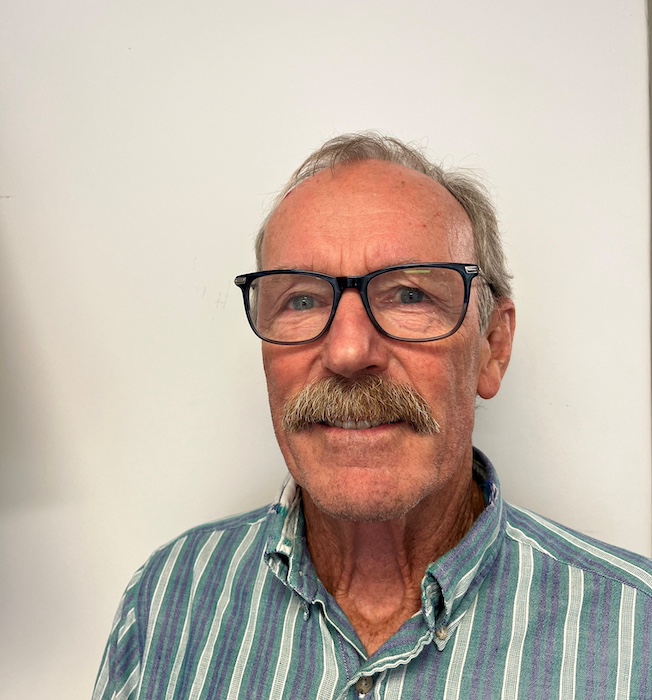
This week we chat with Geoff Prior about a lifetime of sailing, racing, and working on boats. Geoff is a partner in AB Marine and has raced in every sailing competition imaginable, spanning back to his upbringing in New Zealand.
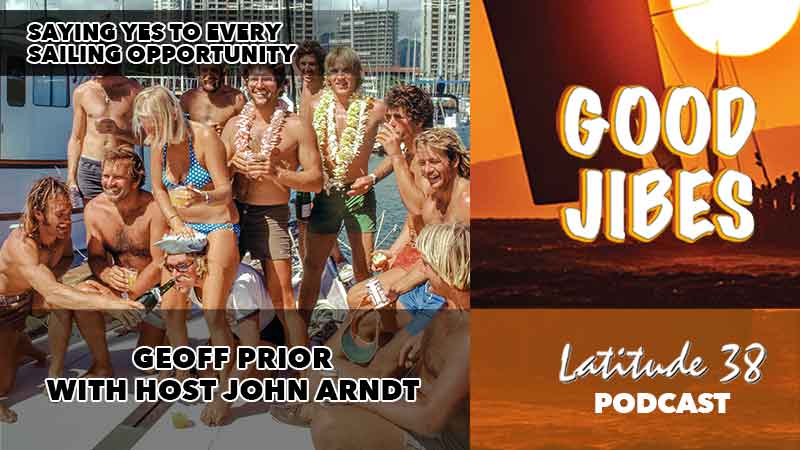
Tune in as Geoff chats with Good Jibes host John Arndt about how to join a sailing crew, the famous boats he’s raced on, what’s changed about boats and racing over the years, the innovation in the propeller space, and how to sail your entire life without owning a boat.
Here’s a sample of what you’ll hear in this episode:
- What was typical of sailing Maxi yachts?
- Where did the Maxi’s take Geoff in the world?
- What kind of sailing was he doing in New Zealand?
- Where are some of those old boats now?
- What cool new boats are coming out lately?
Learn more about Geoff at AB-Marine.com
Listen to the episode on Apple Podcasts, Spotify, and your other favorite podcast spots — follow and leave a 5-star review if you’re feeling the Good Jibes!
Check out the episode and show notes below for much more detail.
Show Notes
- Geoff Prior on Saying Yes to Every Sailing Opportunity, with Host John Arndt
- [0:17] Welcome to Good Jibes with Latitude 38
- [0:49] Welcome, Geoff Prior, to the show!
- [2:02] Geoff’s memorable sailing story
- [4:01] Did Geoff work for Watts Sails for 5 years?
- [4:44] Geoff’s experience of pro sailing
- [6:24] What kind of sailing was he doing in New Zealand?
- [7:47] What was typical of sailing Maxi yachts?
- [10:09] What boats has Geoff raced on?
- [11:09] Where did the Maxi’s take Geoff in the world?
- [12:48] What changed that shifted Geoff’s sailing focus?
- [14:32] How many of the crew were pros vs friends of the owner?
- [15:19] Where are some of those old boats now?
- [16:10] Sailing the ZAP 26
- [19:53] What does Geoff sail now?
- [21:45] Find your own copy of Latitude 38 at Latitude38.com
- Racing
- [22:36] How does Geoff stay involved in sailing?
- [26:06] Is there a rating penalty for folding?
- [27:36] What cool new boats are coming out lately?
- [30:21] What are the most popular races in Geoff’s community?
- [32:14] Is the sun impacting classic boat materials?
- [35:14] Geoff shares about some of his old races!
- [38:05] How did we handle 28-people crews?
- [39:30] Does Geoff have any experience with multihull sailing?
- [40:34] Are you thinking of sailing to Mexico or across the Pacific? Latitude 38 has a resource page called “Heading South” & the “First Timer’s Guide” to help you prepare
- Short Tacks
- [41:28] Has Geoff ever owned a boat?
- [42:17] Which boat would he like to buy?
- [43:18] Does Geoff spend much time in New Zealand?
- [44:00] What was Geoff’s favorite boat he crewed on?
- [44:59] His favorite sailing destination
- [46:38] Where does Geoff want to sail that he hasn’t yet?
- [47:46] Geoff’s bid to be a US citizen
- [49:03] The story of Half-Ounce
- [50:30] Check out AB-Marine.com!
- Make sure to follow Good Jibes with Latitude 38 on your favorite podcast spot and leave us a 5-star review on Apple Podcasts
- Check out the July 2025 issue of Latitude 38 Sailing Magazine
- Theme Song: “Pineapple Dream” by Solxis
Transcript:
Please note: this transcript is not 100% accurate.
00:03
Our biggest issue is staying awake at five o’clock at night when the West Coast wakes up, you know.
00:14
Ahoy, welcome aboard everyone. I’m publisher John Arndt at Latitude 38 and the host of today’s episode of Good Jibes. And it’s a podcast to help you experience the world of sailing through the eyes of the West Coast sailor. And it’s all brought to you by Latitude 38, the sailing magazine for West Coast sailors since 1977 and a website newsletter since the year 2000 and a podcast now for three years. So we hope you’ve captured all that we produce about West Coast sailing.
00:47
So today’s guest is sailor and now marine entrepreneur business man, Geoff Prior, who is running AB Marine on the East Coast, but landed here from New Zealand in California, where he started his US sailing. Welcome aboard, Geoff. Hi, John. Good to chat with you. Yeah, good to have you here. So Geoff has been sailing on
01:09
A lot of maxis. is a few years ago, but a lot of sailing up and down the California coast, around the Pacific, and then across the world on a long list of illustrious boats, including Jim Kilroy’s Kealua, and also Condor, Boomerang, Nirvana. This list goes on. Matador, can’t believe you covered all these darn boats. Nirvana, Matador, Undine, Checkmate, Drifter, even Gary Mull’s design Zap, and then Flyer, and also…
01:39
won the Fastnet race, Sydney Hobart and other international races. And he also represented New Zealand in the quarter ton and half ton cups and Admiral’s Cup and design sales for hood sales. So, that’s quite a lot of miles of sailing, which you’ve now been more land bound since your Marine career, but wanted you to maybe start off with a memorable story from all those sailing miles that could share with us. mean, to pick one of there’s got to be many. Well, a lot of stories, but one of the
02:08
First ones was when I arrived in California back from Europe doing the half ton, one ton, cetera. I went down to what I thought was to see Marina Del Rey, the world’s biggest marina. Well, I found a marina just south of that, King Harbor. I didn’t know it was the biggest marina I’d ever seen, so I wandered down the dock. They were asking for crew members to…
02:37
to sail in the Kel 20s. It was the Intergalactical World Championships or something there. So I had nothing to do. So I said, oh yeah, I’ll sail. And so I went out with, don’t remember the owner, and having just come back, tweaked his boat. It was light air. It was the lightest air I’d ever sailed in actually. we won a race or two. And when we came back into the dock,
03:03
tied up alongside Billy Peterson and his wife Donna. And Billy being the sales by what salesman was off dealing with sales by what’s and so I helped his wife drop the main and so the boom wouldn’t hit her in the head. And I went to the bar that night with those boys and that was history. I stayed in California for the next five years and sailed doing everything every week.
03:31
Good grief that that yeah funny how those cross such chances happen as you cross the world under under sail but you went from doing the half ton worlds in England to sailing Cal 20s. Yeah well actually it was in Trieste and then I went to England and did a bit of sailing there and I had a job back home as an engineer but I never did make it back home. Sailing has a way of doing that to some people. Yeah.
03:58
So what were you doing in, so you were working for Watt Sales for five years? Well, they asked me to go, know, what was I doing next week? Did I want to do a race to Cabo? I didn’t know where Cabo was. a couple of weeks later, was where did I want to go up and do Big Boat? I never knew where that was. So I just kept saying yes. And many years later, I was working for Burke and Eddie Lawrence, Billy Peterson, Norm Devant and
04:26
Mark Baxter was there, he now works for North Store. So there was a bunch of guys still in the business and that was, got me staying in the US ever since. Wow. That’s, that’s great. So you were a SoCal sailor when you landed in the US and then big boat series. And then, so when did you move on? I guess this was pro sailing at the time. Really like pro sailing was you were a sailmaker and, and helped your customers. That was correct. You didn’t get paid and
04:55
Even the deliveries that you did on a boat, you didn’t get paid, you did it for the fun of it. You know, I went down, represented, I was on the US team for the Southern Cross Cup. That was Kealua, Passage and Phantom. And we all just did it for fun. You know, didn’t get paid. And then I came back to California, kept sailing. And then I went across to the East Coast, to Fort Lauderdale and started the SORC.
05:24
First on Keelaw and then on Condor and then I was transatlantic in England, did more racing there. And then I ran into Ted Hood, Chris Buzade and Robbie Doyle in a pub in Cowes. And they said, well, why don’t you come back and we want you to do the 12 meters with us, America’s Cup. So I came back and did that with Dennis on Freedom. Oh, really?
05:52
Yeah, and then the next time was with the Aussies and the Kiwis and the Australians. So you just kept doing it. Wow. That’s yeah. Well, you know, pubs are good place to get a job, I guess. Definitely. Yeah. They bought me a beer and I said yes. That sounds pretty good. I flew back to Marblehead and when I got there, it was six o’clock at night and there was snow coming down. I’d never seen snow in my life. Oh, you’re kidding me. Really? Yeah.
06:22
Wow. What kind of sailing were you doing in New Zealand before you got sort of bumped up to all this or was sailing your thing down there? Sailing was our thing. think Brendan sent you through a photo of Namu. That was a Jim Young 36 footer. One ton is they were the biggest boats at the time. Namu was the biggest. We’d raised that. You’d call it offshore. No lifelines. We did quarter ton, half ton. I did a lot of those series down there.
06:52
way around the Gulf, you racing every weekend. And if you didn’t race, you went away cruising. That’s pretty good. What were you cruising on? Seamboats. You remember they all had bunks and a galley and a head in those days. Yeah, you didn’t have a big affstate room with an old sweet, you know, head to it or anything like that? No, no, there’s no boats like that then. That was the closest was the Maxis, actually the first original Maxis. They all had a galley and we all sat around to have a dinner. They all had a cook. Oh my.
07:22
What luxury. Yes. There’s dry food and racing now, which, you know, I’ve done all the ORC stuff over the last couple of years even. And I mean, that’s just sit on the rail all night with your arms hanging out in front of you, you know. Got to put on the beef to keep those rail the rail down. Yeah. Like back then too, you were sailing obviously heavier boats. Wire guys, wire halyards, meat hooks in your
07:51
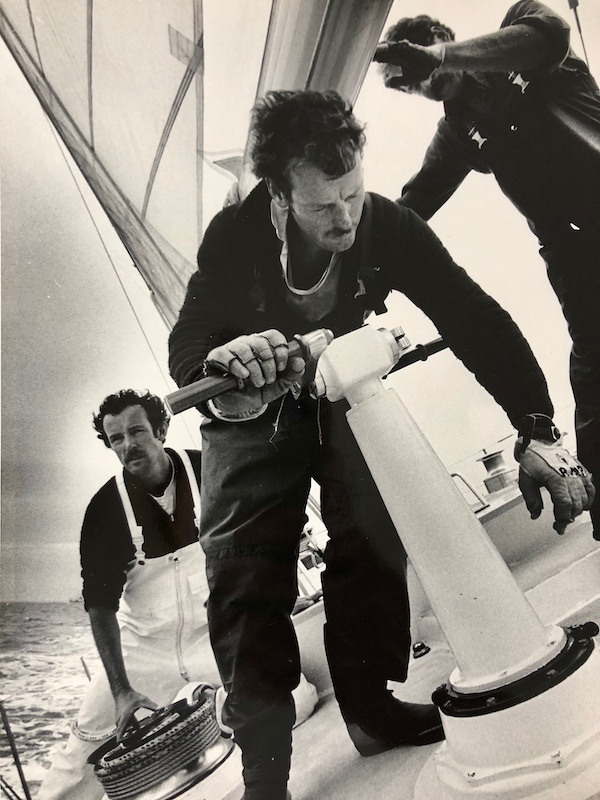
palm of your hand. What else was sort of typical of the time in sailing the Maxis then? I mean, they were powered up boats. Well, the thing was we kept increasing the sail plan. It was just continuous. The winches would start to fail. Then the hatchets, we went to fight. We used 5-8 wire on the jib sheets. Then, you know, the sails would start to break. So then, you know, I worked on the D-rings in the corner and the way to
08:21
you know, spread the loads out of the corners, the webbing. Then we went to Kevlar. The initial Kevlar sails didn’t last very long, I can tell you. One race and they were demolished. And that’s how we came up with, you know, Kevlar in the corners, Dacron in certain parts, just because it was more forgiving. Like the spinnakers, like on flyer, we developed those so that they could take, you know, the surge when you dropped at the bottom of a wave, you know, those boats would
08:50
get up to 16, 18 knots, we hit 20 a few times, but then they stopped. And that would load up the rig and the sails and everything would… And then we had some very bad accidents too, you know, like in Nevada at the Sydney, you know, where the after guy broke, went around the headstay, took a couple of crew members off and one of the guys whose broken arm, broken legs, that sort of thing. Yeah, I remember that Dave Hutchinson, right? That was…
09:19
He’s okay now, but you know, that sort of accident. Yeah, I that was a scary one. He really got flung, really, right? mean, yeah. Dennis Cook on Keel-O-Four, I think it was, in the Round the State race. Yeah. His finger. So we just tossed him overboard as we came in close to the shore. Luckily the sharks got him. That’ll live for that sort of stuff. Yeah. Well, it still can be those boats, even the modern lighter.
09:47
you know, finer ones can get pretty powered up and still be pretty dangerous, but still a different era. mean, a flogging wire sheet was a pretty deadly weapon. Yeah, no, you have to think it through. And we had big crews, too. You we had crews of 26, 28 at the time in oil racing and that. Yeah. Yeah. What big boats? What did you do? Big boat series on there? What you remember? What you raised on then? Any? I know you’ve covered a lot of boats here, but I did it.
10:17
on a whole bunch of boats, nemochritans, there was the far boats, there was, I guess did it on checkmate. I don’t have to think back, can’t remember when I went up there. I know I sat in a van with, sitting on the cooler of rums, handing them out to, had all the sails in the back of Billy Peterson’s van. San Francisco, that was my first time. I didn’t know what the plants were.
10:45
growing in the fields alongside me. That’s how. There were plenty of those back then. Yeah. Yeah. Well, I guess there are now two as well. Yeah. So so when you yeah, you went off. What other events did you do on the Maxis or where did the Maxis take you in the world? Well, everywhere we went up to Sweden, did all the med series. Yeah. When I started working for Hood, I got involved with the. Houseman.
11:14
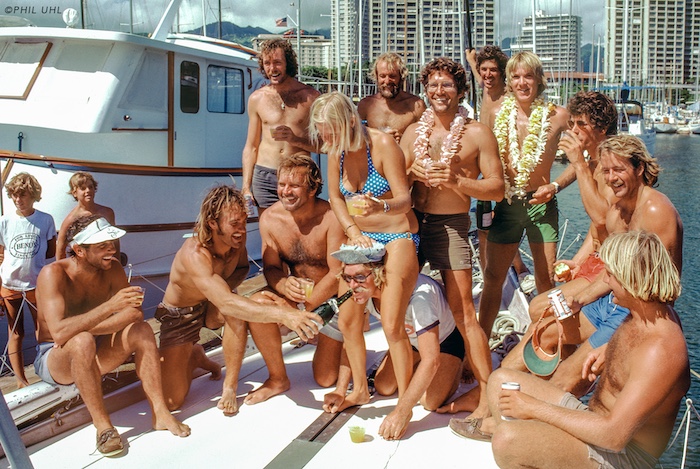
and with Walter and with Helmand Frears and set up all the first boats, the first maxi he did, Halasara. Herbert Von Karajan, the conductor, philharmonic conductor from, where was it, somewhere in Europe, he would invite me three times a year to come over and stay in Saint-Tropez with him and train his crew. He was more interested in going past the topless woman on all the boats. They were fun times.
11:42
fly over there, spend the four days and then fly back. I never went and played tourist. There was the med stuff. Then when the first catamarans and trimarans came out, I was over there with Cam Lewis, Peter Bateman with all the French crazies. Then of course all the series there in Sardinia and Parma. There was all the English stuff, Denmark, Sweden.
12:10
Did quite a number of trips up to Nautor, Swann and Baltic, even with Rod Stephen going up there in the middle of winter. Again, that was going with him and then hauling him up the mast and on top of the mast, because he had to check every shackle, make sure everything was perfect. They would set a bottle with a little glass of liqueur on top of the mast for him to have a sip because he was a tea totaler, but he had to drink that.
12:39
Or they wouldn’t let them down? Yep. That’s great. Yeah. So yeah, I mean, all those boats, that maxi circuit went on for quite a while. And then I guess that was the IOR maxi circuit. And then I guess IOR rules started to fade away and the maxi circuit started to fade away. What changed along the way there to maybe shift the game? Well, was the first time that every new boat had to be completely different. And that’s where
13:09
The hood rigs we made, okay, there’s an extrusion cost, know, a die cost. Just couldn’t keep up with it, you know. And so the same with the IOR boats, they sort of went out of phase as IMS came in and then the ORC boats, know. Of course, different owners came involved with, some had more money than the existing owners couldn’t keep up with that game if you had to beat everyone else, you know, with a better boat. And then of course,
13:39
The came into it. were the first crews that I sailed with. They all got paid. I was just getting my salary from Hood. But you got a salary when you were away sailing in Sardinia. Yeah. Yeah. So at least you weren’t… Yeah, you got to work a few hours, but some of that work was sailing Sardinia. Yeah. I mean, we worked all night. I finished a race in Hawaii or Sardinia or wherever. We worked all night repairing sails.
14:08
changing loft curves and parking lots, running the sewing machine. We’d ship sewing machines there. It’s not like today where, I’ll say, the experts, they handed across to a repair loft. It was all pretty low key at that time. Yeah, yeah. You got a lot of good t-shirts from that time, I bet. Yeah, got a few. Yeah, yeah. Wow. Yeah, that was definitely a different era. And so how many of the crew were?
14:35
just friends of the owner versus pros. mean, those kinds of boats, got a lot of… Actually, we only got paid on Kealaw, like Kealaw III. We got paid when we did shipyard work. And that wasn’t service work, like servicing the sheets or the winches. was when we actually physically did shipyard work, know, painting the bottom and that. yeah, Bruce Kendall, he was paid, but the rest of us, Neil Harvey and Tink…
15:01
Chambers we were on board and yeah, we got free food. We got free rum Good stuff that makes it all worth it. Yeah, yeah with you know, where any of these boats are today boomerang kilo I mean, know Windward Passage is down in Newport Beach one of the Beautiful old boats of the era, but how about any of the others? know where they are? Phantom was in in the mid Kilo are three. She’s now racing. She’s you know
15:31
doing, maybe should be doing the fastnet again. She did that last year. She did the Hobart. Oh really? Great. I think it’s owned by a Swede maybe. I don’t know. Haven’t kept up with them. Some of those old boats, honestly, know, some got left, some got sunk. Yeah. Well, that, yeah, I mean, various of these classes seem to make a comeback at some point, but I guess they’re pretty brutal big boats to
15:59
Bring back in the designs have progressed so much since those guys were hauling around. remember Sorcery and so many of those too that Gary Mull designed. What was that? Tell us about Zap. What was a little Zap that you were racing out here? 26 footer that Gary Mull had. We raced at the Sales by Watt’s team. Billy, Charles, Norm. There was a guy, Graham, I forget his last name. We’d raced that out at San Pedro or whatever.
16:27
take it around Catalina. Oh yeah. You know, the Morse racing, that was a lot of fun. That was a lot like the boats that we’d had in New Zealand. Bruce Farr had done. They just took that sizing and just brought it all the way up. You I saw with Pierre Fellman on the Farr boats, on the wheel boats, that sort of thing. Yeah. So it was a 26, was that quarter tonner or that was too big for, or that was half tonner? Where would that fit in the lineup? I can’t remember.
16:58
Yeah. I mean, that was a quarter tonne. It seemed like they were more like 24 or five and half tonne is 28 or something like that. Gary Mull stretched it, stretched them out for the light air. They were tip trucks downwind in a breeze. Yeah. Tip trucks. Yeah. Those pinched ends. And you did a Wichita on the flyer? Well, I did a leg wind flyer. I went to all the port stops, did all the pre-start. I had to work.
17:28
Oh, yeah, boomer. Like, floating around the world with it. Yeah, yeah, did all that. You know, sailed with it quite a bit beforehand, Yeah, yeah. You’re working for Hood. We’re developing, you know, masts and sails with the different designers. know, yeah, I mean, Bruce pretty well. Bruce Farr, you know, worked with those guys trying to get boats with Hermann Frears. Yeah, did a down there in
17:57
Mata o Pata, you know, to the race they had the equivalent of an SRC where you went from Rio down the coast. This is I did do. Yeah, no kidding. Yeah, well, a lot of ground covered, a lot of different events. also that was you did Kenwood Cup out in Hawaii. Did you do that? Oh, Did that when it used to be called around the state and when it was Pan Am Clipper Cup, did that quite a few times.
18:27
Oh, quite a few times. Yeah. And how many boats were out of that event? That was Hawaii and they did a buoy racing as well as around the state race. Yeah. What we did was we did Transpac and then we went just trying to think of how it went. Did we go to the island? That’s where we met. We had Jimmy Buffett on board Kealua 3. Oh, fun. Off Lahaina. Then I think we came back and we did the round the state race. That was the initial stuff. And then they call it
18:57
The Pan Am Clipper Cup series. I’d have to go back and search, which I know I did every year. Yeah, Yeah, Pan Am Clipper Cup, then it became Kenwood Cup and then… Yeah. And saw some spectacular things, you know, going up the bottom of the big island there, tacking in right to the shore with a lava storm coming down. Oh, wow. Blowing 30 knots, two reefs in, number four, you know. Jesus.
19:24
Yeah, intense. Well, Transpac is going on right now. First boats will be finishing maybe, it looks like Sunday. Well, maybe, yeah, lucky the 1K88 is zipping down there right now, heading down to the, well, it’s got six, 700 miles or 800 miles to go or something, Two days. Yeah, I know. They rip off the miles there from the big boats. Yeah, different speed than they were going when you were out there. Definitely. Yeah. Yeah, yeah, yeah. Huh.
19:53
from all that, what do you, in the modern boats or ORC, what have you, what’s been going on in the racing scene there or what are you doing now? Well, up until I did my shoulder in Christmas, I’ve been racing a GP42 with Tom Rich out of New England Bow Works. Did a couple of ORC boats, a trip boat, a 40, 43 foot trip. Before that, you know, the
20:22
was the old IOR boats. There’s a very competitive Shields fleet here with about 30 boats every Wednesday night with more Olympic sailors and young sailors than us old guys can now keep up with. I was talking to John Burnham earlier today. He said he’s been having good fun with that Shields fleet this year. So, it’s spring series, I think. Yeah, this one.
20:51
We still haven’t got going yet. Oh yeah? Time to get out there. Summer’s ticking by. Well, the water’s too cold for us all guys now. Hey, come on now. know, there’s modern clothing now too you can upgrade. Well, I still got my Line 7. I think you can see that in one of those photos I sent you. Line 7, then we had the white Line 7. The new clothing actually, you can wear that Line 7 and not sweat anymore because it soaks up the water.
21:21
for years, know, this new stuff, you do get wet. Yeah, yeah, yeah. Well, that Line 7 was a good shield. That was, yeah. Are they still around as a company? probably, I haven’t seen anything from them. They may still be making it for the farmers in New Zealand again for all I know. Yeah. Keep the sheep dry. You may be asking, how can I find my own copy of Latitude 38 magazine? Well, it can be as simple as walking into your marina.
21:50
Marine Store, Club, or any California waterfront business. You’ll likely connect with sailors when you walk in the door and you’ll also find many more sailors as you read through the pages of Latitude 38. Bringing home a copy of Latitude 38 is also a great way to redecorate your coffee table and reading one will help you unwind from the distractions of the day. It’s almost as good as a day of sailing itself. To find a copy of Latitude 38 near you, go to latitude38.com
22:19
click on find the magazine at the top of the page. Then go out and meet some sailors.
22:26
So yeah, so tell us a little bit too now, what you’re up to now? I know you’re selling. Well, AB Marine is… How long you been there? Well, Chris Brizade started the company and I joined 20 after… I went and worked for Bob Director and ran his shipyard here, running three dry docks, the whole repair side doing Coast Guard ships and boy tenders, that sort of thing.
22:56
He ended up closing the yard when he got a few issues. I went and worked for Ted Hood and set up his little hub, Marine, which is in Portsmouth, Rhode Island. And for 12 years, built it from like 20 guys up to about 139 guys. And then he sold that to Bain Financial and got out of that. And Chris had just started AB Marine.
23:27
He had worked for Ted when they had sold hood sail makers to Jacques Sertong in Frenchman. And again, we, none of us lasted too long after that. The Kiwi style of business is different. We built up AB Marine, started off with our primary is the Gori propeller. Yeah. Both the race, the two blade and the three blade. There’s five of us here.
23:55
Brendan, my son, he joined three years ago to take over. So yeah, I’ll retire one day. Yeah. If he lets you. Yeah. We’ve got the Sharpshak line cutter, LASDROP, dripless shaft seals, Moonlight hatches. And for the last two years, we’re now doing the understaffed propeller service and upgrades and that for all of super yachts. So yeah. And you know,
24:24
Our biggest issue is staying awake at five o’clock at night when the West Coast wakes up, you know. Yes. Hey, you know, aren’t you happy I picked a time like 1130? For you? mean, I’m thirty. Yeah, right. I didn’t think we should do this podcast at five o’clock my time. Yeah, fair or two by then. Yeah, exactly. Exactly. Well, yeah, we’ll do in the maxi yachts. You know, they’re probably pumped.
24:50
building those as quickly as they used to build Cal 20s out there in Southern California. It seems like the maxi out world is where the production runs are. Yeah, the super yachts out of Europe is just ongoing. mean, it’s no boats are being built. There’s the odd one or two custom one-offs. There’s a Pedrick design being built up at Rockland up in Maine. Yeah. There’s the odd boat being built up at
25:18
Brooklyn Boat Works, is again wood. Yeah. Yeah. I’ll say sailboats are, um, know, Catalina if, you know, there’s nothing else in this country at all. So you, know, for us, we’re selling to the end users and the guy that wants to upgrade and the race guys, you know, that are picking up TP 52s or whatever. Right. Yeah. Yeah. Well that TP 52, we’ve got a, what, two or three, I think in the Transpac, you know, that was the,
25:48
Transpac 52 when it was created, but it became Great Lakes and Mediterranean Boat, but there’s a few out here now. We just did a whole bunch of propellers, race propellers, working with Greg Stewart, optimizing their rating. So yeah, it’s going. Greg Stewart, well, there’s no rating penalty for a folding prop though, right? Well, there is when it’s too close to…
26:15
The sail drive, there’s some quirks in the rule. Oh really? Yeah. That’s interesting. So how does somebody get their, you know, rating improved with a folding problem? What’s the secret? Well, you’ve got to go to a bigger diameter than say what is the Yanmar or Volvo approved. But you you go racing, you’re not motoring, so there’s no worry there. Yeah. Yeah. I mean, if it’s folded up, it’s pretty slippery. Yeah. The Gori race has got zero drag and
26:45
Couple of the boats there actually even have the Three Blade, which is only, it’s got less drag than any other Two Blade are on the market. So a lot of the race cruise boats, Cecil, think, what boat did he have here? Far 50. I think he won his class last Transpac with the Gori Three Blade. Oh really? Oh good. Yeah. Well there, so you must have a few of them racing to Hawaii right now then. Oh, definitely. Yeah. I know the names.
27:13
Whoever paid the bill is what we… Yeah. Well, know, Meany’s out there, Jeff Thorpe’s out there on Meany and let’s see who Alfavonius2 is out there racing across. There’s another TP52. Who else out there? There’s a few of them out there. I’m watching them get into the right angle and zip across the…rip across the Pacific. Yeah. What’s growing in the marketplace right now as far as…
27:39
cool new boats coming up here and you’re in touch and watching anything new coming out of Europe or or out of your homeland New Zealand? I mean the J boats are doing quite well. was with Jeff Johnstone yesterday. You know, he’s got the J40, re racing that. I’ve got to work on what the difference in drag and speed is between the two blade race and the three blade because you know next week you’ve just raced but next week the owner wants to take his family you know.
28:07
wherever you’re motoring to at the Chesapeake or the big thing is like when the boys take it down to Mexico, they’ve got a motor back. so, DuBlage, you’re using a lot of fuel just to get that speed. The race boats, the race cruise boats, know, the Beneteau first, they seem to be doing well, but we still don’t have that market that say like the Australians do, you know, out of Sydney where they’re competitively racing them.
28:36
Yeah, yeah. Well, I think that Beneteau First 36 is out front right now, still hanging on out in the front of the whole Transpac. So they’re having a nice run right now. Yeah, you went the right way. Yeah, I think they’re pushing it hard too, I’m sure. they’re, yeah, Charlie, they’re just cranking along. There’s a resurgence of the race of cruisers and just
29:05
I’ll say locally there’s a lot more people doing the the round the marks, you know, not the up and down sausage course. Yeah. And you know, people are enjoying that. For the last couple of years, I’ve been going up to Maine to do the classic series. Oh, fun. Yeah. There’s a lot of fun racing around the islands. Chris Buzade, we had a Ludus 24 and now we’ve got a 30 square meter.
29:33
Christmas Sun and Richard Bezade, know, one of the principals of Doyle. Yeah. We’ve tricked it out and added to the boom and added to the mast. And we’re, know, for a little boat that’s five foot five beam and 24 foot water line, but 40 feet overall. 24 foot water line and 40 feet over. Oh, yeah. We’re racing against the raid and the the old wooden 12 meters and a lot of the classic yawls black black watch.
30:03
So with a little boat and the big boat fleet and being, you you’re outside the islands there, so it can get quite bumpy. The lifelines and getting wet, you know, the building is going quite a bit. Yeah, that’s well, that sounds fun. Yeah. No, I think, you know, the round the island races and also the double handed races, you know, doing this stuff here is definitely more popular. Of course, our big race on the bay that’s so popular is the Three Bridge Fiasco, which is
30:32
around the islands basically as well as to the bridges but also shorthanded. And so the combination of shorthanded and sort of not a sausage attracts 300 plus boats. So it’s super popular here. And you’re getting similar stuff there? Yeah. mean, take the Egg Morgan. There’s 150, 200 boats in that. Wooden boats, those are classic boats? Or that’s a fiberglass? They have classes for everything.
31:01
So you get all the classics, then you get the plastic fantastics, and then you get the boat that is to the latest Jim Taylor design classic. A spirit of tradition, they call that. And of course, that boat just was racing in ORC1 at Block Island. So it’s no slouch on the race course.
31:29
My eyes on the shrouds or anything like that. Well, I actually, they’re doing a lot of dead eyes on boats now, right, with with Dyneema or, you know, rigging or are they? don’t know. I’ve heard that. Yeah, no, no. There’s, you know, a lot of the Aramid rigging. mean, we work quite closely with BSI, which is that’s what Gori is Moonlight and Hunderstead Propeller. They’re all part of the BSI group. So BSI rigging.
31:59
Ulf is just down the road from us here. So we were actually with him. They’re putting a lot of the aramid rigging on saving weight, you know, so tricking the boats out. Yeah, just on that. mean, I think people worry about dining or the fibers being sun impacted. And is that a worry or this stuff is so solid and better than steel? It’s got a cover on it. I mean, even on that, you know, even on Hanuman, which, you know, I’ve raced on her. We had
32:29
all the Dyneema. Really? For her shrouds? Shrouds and, you know, for the sheets and all that. Wow. And maybe just, you know, maybe not everybody knows what Hunnamun is, but that’s a big boat, right? The old J boats. Yeah. Yeah. So she’s, how long, 130, 135 or? Right. And all those boats have understeer propeller systems in it. That is the controllable pitch propellers. They can
32:57
have no drag when they’re sailing, but then they can decide what pitch they want with what RPM. really? Wow. Interesting. Wow. Actually, that’s now I don’t know if you’ve I haven’t heard what happened to the Mexican tall ship that backed into the Brooklyn Bridge, but that sounded like a propeller problem. Like, I don’t know. It hasn’t. I haven’t heard any release. Maybe that’s not it. But maybe they tried to shift from reverse to forward. And I mean,
33:25
one position, i.e. reversed by the sounds of it because it kept accelerating. But there’s a lot of things happening now in propellers. We’ve just come out with a hybrid Gori propeller for regeneration, electric drives and that. And the latest Baltic, the 110, I think it was, it just sailed down from Baltic down to the Med and never used its engine once. And that’s running everything electric on board.
33:54
just by regeneration with the understead. Ah, so you have a prop that can both fold or stay open? Yeah, or the step is feathering where it’ll pitch. OK. No drag to whatever pitch you want to regenerate. And the gory will stay open and regenerate even at low speeds. So not as efficient as when you get to, 8 knots. Yeah. And that’s got, you know.
34:22
the lowest drag, only 1.4 Newton meter of drag compared to a standard two blade. People may know the old Martek and those, they all had 2.2, 2.4 Newton meter of drag. Huh. Yeah, that’s something, you know, I keep thinking, you know, there’s people designing new anchors, new propellers. This is old, old ancient technology has been around forever, but there’s still advances being made across electric drive and all the new.
34:50
sustainability initiatives create a lot of new opportunity and amazing that this is still coming along in a way. Yeah, mean electric will get there. It’s just like the electric cars, you know. Yeah, well, I got one now. yeah, I love not going to a gas station. It’s really fun to drive by and not have to look at the price. Yeah, so that’s good.
35:17
Yeah, what about just maybe thinking back to some of those old races we got as you also did the you’re on checkmate and that was a 50 footer. Is that right? Yeah, that was. Livingston, yeah, and so I’ll let with Buzz Betcher with Eddie Lawrence. Yeah, did that and around the state race. There’s a whole bunch that was all Californians. Alan Blunt was Australian. I was Kiwi and then we had Dominique.
35:47
who was Frenchman. He still lives somewhere out there. Is it Long Beach, Newport Beach, somewhere there? Wow. Yeah. you got around. Who else were you racing against with Checkmate? I think it was Jubilation. who else was in that fleet at that time? I’m trying to think. Because that was a good, know, that’s Big Boat series used to collect those up and boats would get trucked across the country.
36:14
to reach out here, which really isn’t happening much. mean, occasional boat shows up, but it’s it’s a different circuit these days. Oh, yeah. I mean, when I see what who’s racing now compared to, you know, a bunch of maxis there, we would stay in an RV in the St. Francis parking lot. There was a party every night. I remember, you know, the deals may be fuzzy, but the that you know, they happened. Yeah. You know, we had a lay day. We went up to the Russian River and
36:43
kayak down with wine and cheese and bread. Well, I guess that’s the other thing. Big boats race was a week as was Kenwood Cup and SRC was a month, right? I these weren’t four day regattas as so many of them are now. Yeah. mean, you did straight after NASA and SRC. You then went back and I think you waited a week and then you did the
37:13
Jamaica race. Right. You know, yes, I was able to come back sometimes. Sometimes I do the delivery from there to Antigua. Then you did the Antigua race. know, the Maxis all were there doing that. Did the Antigua race week, you know, quite a few years. Yeah. Then you’d race Antigua Bermuda. And then there was a race from Bermuda back to Newport. And then all the boats would get reworked before they did Transatlantic and go across for the Cow’s Week, Admiral’s Cup, you know.
37:43
Wow. Having all those experts on board for cows like Ted Turner and, know, you know. Yeah, good grief. mean, that’s, you know, I mean, that seems almost unbelievable to think how much time crews would spend racing in that. guess it was more affordable because you’re all racing for free, so to speak. I guess sales, you know, selling sales was primarily funding everybody’s crewing lifestyle or what? I mean, how many of the
38:11
If you had 28 crew or 26 crew in a boat, were they getting all that time off to do that whole circuit? mean, because they couldn’t all be sailmakers, obviously. Oh, no, There was only me as a sailmaker. You’d have maybe four or five of the guys like Neil Harvey and Tink Chambers, John Thackeray, they were the crew members. And then the rest were all friends of the owners that would fly in, different guys, you know, for different weeks. Wow. It was their holiday, you know.
38:42
Yeah, yeah. lot of the boys came from San Francisco and from LA. Con Finley and those guys. Wow. Yeah, quite, quite the lineup. Yeah, no, it seems sort of incredible these days to try and get that amount of time off to do that, do that much racing, especially for owners, because they were probably aboard for all those events, right? Or if you were racing in Tiga de Bermuda, was that, I don’t actually remember that. that was a… Bob Bell was on one of them. Yeah.
39:12
Some of those owners would skip those races, you know, because they weren’t the high priority. Yep. Yep. They weren’t the big name events. When we did the maxis out of Newport, you know, again, all the owners came in and the big wigs, you know, with invited guests like Mr. Kennedy and… Yeah. Yeah. Fantastic. Yeah. What about the multi-hull scene now? Have you done much with that? No. We’re supplying propellers to all the…
39:41
multi-hulls because they went from the cruising boat to now there’s an actual race division with the New York Yacht Club. These H &H gun boats and they are competitive. They’re putting in titanium sail drives, changing the angle so they’re not down. They’re coming out the side so when the hull’s up, there’s no drag. Oh, you’re kidding me. Wow. Money’s no object by the time you get up to that level. They all want to win.
40:10
Yeah, I know. You want to win no matter whether you’re on a Shields in Newport in Narragansett Bay or you’re winning on your HH 66. We’ve got one on the Bay here. Flash is out here. I think it was racing around Antigua in that area, but it’s on the Bay right now. There’s a lot of that. There’s one, what is it, going to Hawaii right now too. I forget which one it is, but Convexity, I think it is. Convexity too is racing out to Hawaii.
40:38
Latitude 38 here. Are you thinking of sailing to Mexico or all the way across the Pacific or maybe even further? We just heard from Joanna and Cliff saying, my husband and I subscribe to Latitude 38 and enjoy the Good Jibes podcast regularly. They went on to say they’re headed to Mexico in the fall and will continue across the Pacific to Australia. However, they’re looking to simplify all the choices they need to make to prepare. Of course, there’s tons of resources out there, but…
41:06
Latitude 38 does have a page in our website called Heading South. And we also have Latitude 38’s First Timers Guide to Mexico available to read online on the Heading South page or a printed copy that is available to purchase in our online store. There’s a lot to know, but Latitude38.com is a good place to start. Wow, well that’s quite a tour of boats out here that we’ve had a year tour of the planet. What was just maybe
41:36
Quick shift to gears, but maybe if you were to buy your own boat, all these boats you’ve sailed on, have you ever owned a boat? No, they cost money. That’s the maintenance side. And out here, you’ve to put it up on the land for six months, you know? Well, is, know, a lot of people say sailing is really expensive, but you’ve sailed your whole darn life and never owned a boat. Yeah. You know, I guess you could say PBOs, poor bloody owners, have supported me in a lot of great ways.
42:04
I’m thankful to them all and, you I all the offers, well, chances to see the world they’ve given me. Yeah, no, that’s pretty sweet. Well, if you were to buy a boat and you were to just pick one out of the world that you’ve sailed on or one you think is nice, what would you want to own today? I mean, it’s crazy to think about owning one, I think I’d like a fast cruising boat. you know, I mean, a racer cruiser. I mean, I’m not going to go and
42:34
Yeah. And you know, you’re going to say money is not an object. Well, you’d get the latest, greatest say mills, you know, 42 or whatever, you know, but you can’t cruise on that. A J boat would be nice, you know. Yeah. Maybe one of the Beneteau firsts, you know, because I’ve gone down to Australia quite a bit there. I’ve raced with my brother in law and you know, they’ve gone an X boat, raced on that. They raced quite competitively, you know, in the top of their class. Beneteau’s. Yeah.
43:03
Yeah, I think I’d have to really think about it. Actually, I’m looking at, you know, down east trawlers somewhere in the 26, 28 foot, you know. Yeah, they can motor somewhere and go up to Maine, you know. Yeah, Be pretty sweet. Yeah. Do you get back to New Zealand often now? No, no, I went two years ago. I went down for the first time in 20 years. Oh, you’re kidding me. Wow. Well, there was no reason to, you know, I’d go across to Sydney, Sydney Hobart stuff. No, my brother’s up here and…
43:32
in Newport and in Vermont. He’s been a big boat project manager for the last 30 years. Plenty of sailing and family there too. So that’s good. I’d have to really think about if I got a boat. Right. Well, I’m just wanting some yacht broker to call you after listening to this and say, hey, Jeff, I got the boat you said you want. Yeah. Better find a mooring here on the Conant River. Yeah. That’s the tricky part these days. Yeah. Finding space for a boat.
44:02
What about looking back on all these boats, is there a favorite one that you campaigned aboard? I think, yeah, fun wise was the Kea Loas, Boomerang. Phantom definitely was a lot of fun, especially with the two owners there, getting of it. You sailed very hard, raced very hard, and then they partied very hard. Yeah, no rest for the wicked. Yeah, great. What about, what’s the longest?
44:30
voyage you’ve ever done or longest sail? Maybe that was the flyer with bread or what? I think Transpac, Hawaii. I we went, we delivered Phantom from Hawaii down to Sydney, but we stopped off at a few of the islands. Ah, nice. I mean, you know, two weeks at sea, 25 days was just something. Something to read a book or two or how about you? Yeah.
44:59
see the Southern Cross. What about all these places you’ve sailed? Is there a favorite sailing venue? I enjoyed up in Sweden doing the Gotten Run Race and those sort of places, just maybe because it was the first time in seeing some of that. Down in the Caribbean was nice to have warm water coming over you. Yeah. I think the best sailing I’ve ever done, though, is the Hauraki Gulf.
45:28
back home in New Zealand. mean, when we think, know, Dad dragged us around with the boats he built and they were all small, 26, 28, 30 foot. We went away and we raced them and you know, every weekend you went to a different bay, harbour, not a harbour with, you know, lots of boats in it. you look at all the other places you sail, you just go straight out of them and you look left and right and there’s nothing, you know. Whereas,
45:56
It’s a little bit like going outside of San Fran or out of Reno Del Rey, you know, where do you go from there? Look left and right. Whereas in Auckland, go up to the Bay of Islands and you know, there was a lot of options. Yeah, yeah. Kind of like Maine or the San Juan Islands in Seattle. Yeah. I mean, we’ve got, yeah, we don’t have that. We’re more day sailing here in the Bay and California coast, long straight coastline and sort of, yeah, like North Carolina to Florida too. It’s not a lot of little places to sail to.
46:25
I mean, can see why Maine has so many boats in the summer, but it’s a one month, you know, hopefully with no fog. Yeah. Yeah. Well, you know, they like to stretch out, maybe June 15th to September 15th, you know, if you push the edges. But yeah, it’s short season. Yeah, great. How about, um, say a place you’d want to sail that you never sail? I mean, I sailed down in Chile, what they called the channels down there.
46:54
that was on a swan. was, we stretched it out to 74 feet. It was a swan frieze. That was beautiful down there. But again, weather wise, know, was windy and cold at times. Maybe if you could cruise down Mexico and a little further south, it’s warmer.
47:22
Warmth sounds like a, yeah, pulling you that direction. I can’t understand why the Pilgrims stayed for the second year here. I would have hit it off to New Zealand. Well, some of the English figured that out eventually, didn’t they? They must have got a postcard home from the Pilgrims because yeah, it’s like a lot colder in New England than it is in England itself. How about a favorite sailing themed book? I don’t get much of a chance to read too many books.
47:54
I’ve been reading up on American history, seeing I had to go and get my citizenship. Good for you. Are you now a citizen? Yes. Congratulations. you. And so I’ve read up on all of that. I read all the magazines every week, sort of thing, to keep up with everything. I like to hear that. Yeah. But by time you get home from this, you think you own your own business, it’s 7.30 in the morning until
48:21
5.36 at night and then go and check emails again at nine and 10 because the West Coast is awake, know, or Hawaii or… You’ve got to get an answer to Europe because they’re already going home at two o’clock to have their wine when we get into work at eight, you know? Yeah, they got to figure it out. yeah, you’ve picked up that New England work ethic. I think you need to chill it out a bit. I know. Jeff, this has been great.
48:50
Love having to hear some more about all your sailing stories and the boats that sailed the California coast in a few, couple of decades ago or more. A of stories, know, like Half Ounce, won’t give his real name, but he knows who he is. We were on Drifter, drifting down to, I think it was Mazelon, the Half Ounce, he was using it as a pillow and it fell overboard. That caused a bit of a stir.
49:18
All the stories like that, or when we got to Sardinia and the boys all decided that they would get a bit rowdy and the gendarmes and the police there are all running around all over the place firing their pistols off. You’re keeping your head down? Yeah, A lot of stories. Yeah, I bet. You why are you there? At the prize giving and throwing the Commodore’s wife in the pool. Oh, boy.
49:46
I won’t mention which captain of which super yacht did that, which, I should say, that. Taxi yacht, yeah. He knows, yeah. Yeah. Well, we’ll see, have to see if we can, anybody listening to this will, you know, pinpoint the culprits in these things. Jim Corry did want to ask the crew next day who did it. He did want to find out who threw the Commodore’s wife in the, the…
50:16
There’s a lot of stories. Yeah. Yeah. All good ones. All good ones. All good fun. Well, you live to tell the tale. So that’s the important part. Yeah, Jeff. No, thanks for spending time. Of course, we’ve been working together for many years and it’s always a pleasure to see you and love catching up with you in Annapolis. But is there anything I maybe should have asked you or anything else you’d like to close out before we sign off here? No, no. Just A.B. Marine is in good hands. Brendan is…
50:45
My boss now, as they say, so you’ll meet him in Annapolis. Yeah. And we keep trying to grow AB Marine and we’re into anything that’ll make a boat go faster with the underwater, shafting propellers, that type of stuff. And also representing BSI groups. Yeah. Yeah. Very interesting clients. They’re all passionate about their boats. And so our thing is, if they’ve got an issue, let’s see if we can get them sailing as quickly as possible.
51:15
Yeah, that sounds good. and the people that get in touch with you and find you, where do they find you? Well, they can just, AB Marine, which is the website is sales at ab-marine.com or just go to our website, AB-Marine. They can phone us, email us and we’ll answer.
51:38
No matter what, I think Brendan ought to give you some more time off now that he’s the boss. Maybe you could come into work a little later or go home a little earlier. It just sounds like he’s continuing to work hits to the bone. Yeah, well, these young kids all have, well, he’s not young anymore, they’ve got work ethic. He’s going fishing tomorrow morning. Lucky him. Well, good thing he’s got you to cover for him. So yeah, great. All right. Well, terrific. Well, this is
52:07
been great to talk to you. Great to hear more about checkmate, keelowa, all the great boats from the, from the IOR days. Did some racing then myself. That was fun. And, also we want to just ask our listeners. And also if you’re a listener and not a reader, become a reader, can go to latitude 38.com and find our magazine. Or if you’re a reader and haven’t heard good jobs, we hope you as a listener will send this off to your reading friends so they can listen in and give us a thumbs up on the, on the Good Jibes podcast.
52:37
We’d love to have some more people learn the stories of Geoff Prior and AB Marine and all of the other West Coast sailors who’ve toured the world. So thank you very much for joining us and we will talk to you and see you soon. Navy Annapolis Boat Show again, of course. Cheers!