

Episode #199: Bill and Suzette Lewis on Retiring to Cruise the World
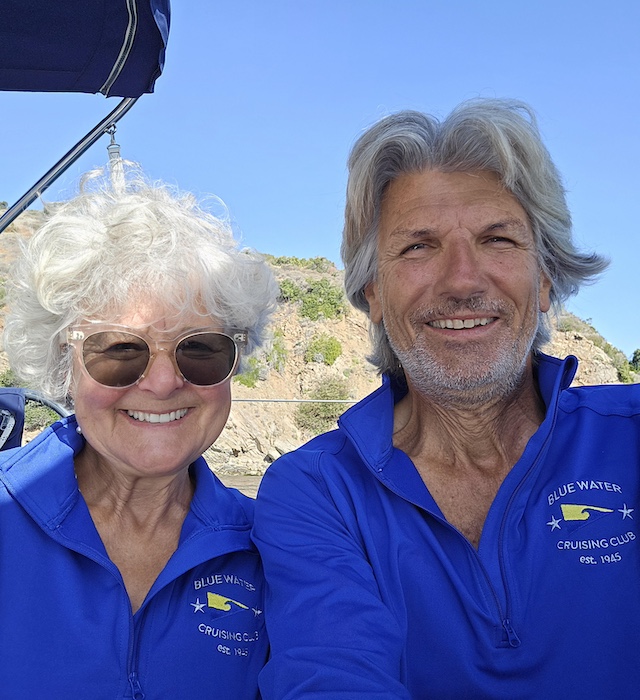
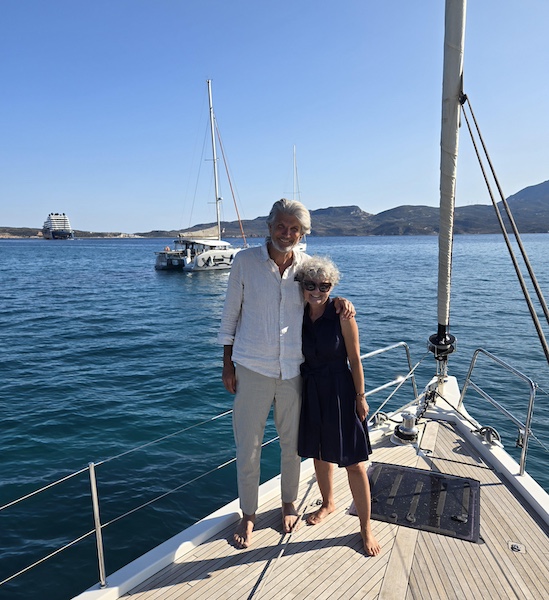
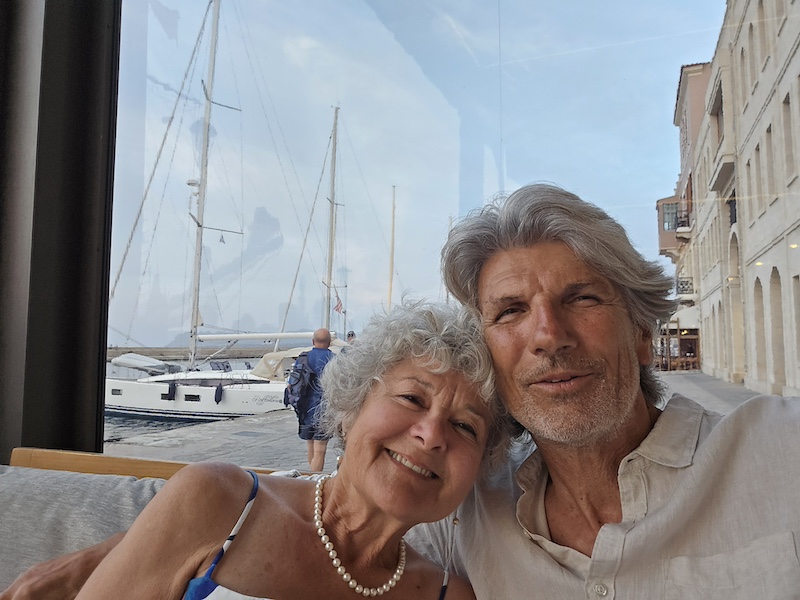
This week we chat with Bill and Suzette Lewis about truly going Where The Wind Blows. Bill and Suzette are Blue Water Cruising Club members (BWCC) who retired so they could cruise the world.
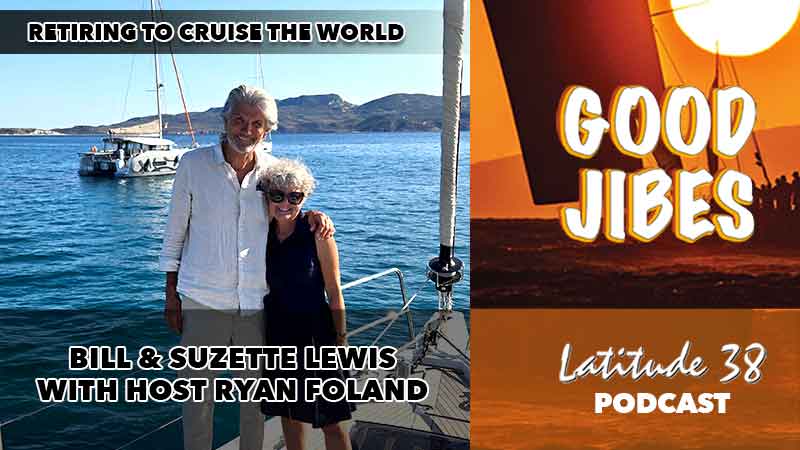
Tune in as Bill and Suzette chat with Good Jibes host Ryan Foland about how a boat played a part on their first date, how to find a suitable cruiser, their brilliant 90-day on-off schedule, their favorite moments and spots around Europe from the past three years, and how to avoid boredom during retirement.
Here’s a sample of what you’ll hear in this episode:
- Why Bill and Suzette don’t let teenagers do their dock maintenance
- The purpose behind their 90 days on, 90 days off cycle
- What makes their story a boatmance?
- What was the planning process for retiring and cruising?
- What does Bill do when he can’t stand up in tiny boats?
Listen to the episode on Apple Podcasts, Spotify, and your other favorite podcast spots — follow and leave a 5-star review if you’re feeling the Good Jibes!
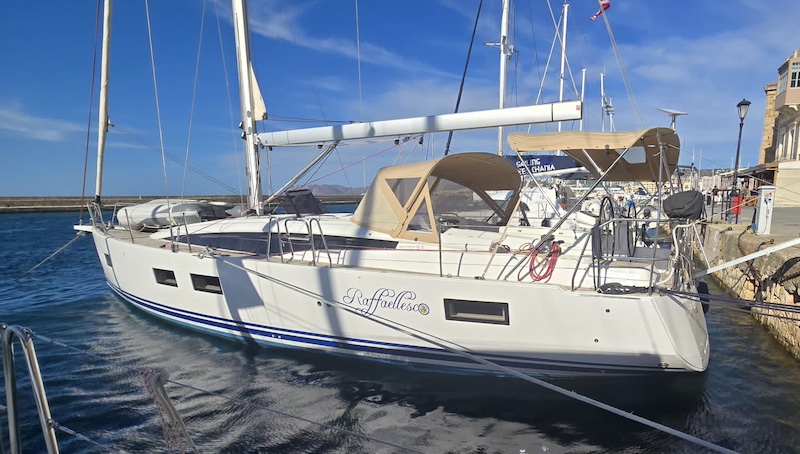
Connect with Bill & Suzette at Raffaellesco.Blogspot.com, the Blue Water Cruising Club at BlueWaterCruisingClub.com, and Ryan at Ryan.Online
Check out the episode and show notes below for much more detail.
Show Notes
- Bill & Suzette Lewis on Retiring to Cruise the World, with Host Ryan Foland
- [0:17] Welcome to Good Jibes with Latitude 38
- [0:50] Welcome, Bill & Suzette Lewis, on the show!
- [1:17] How has sailing shaped their personal stories?
- [3:58] Is their story truly a boatmance?
- [5:12] What kind of adventures did Bill and Suzette see on the Cal 22?
- [6:19] How would they describe Big Geiger Cove?
- [10:45] How long have they been members?
- [12:50] What was the timeline for retiring and cruising?
- [16:02] What does Bill do when he can’t stand up in these boats?
- [19:05] How COVID complicated things
- [23:19] Was their Genoa yacht 51 they bought in Latitude 38 Classy Classifieds?
- [27:42] Get your own copy of Latitude 38 at Latitude38.com
- [28:33] Did Bill & Suzette have everything mapped out?
- [31:51] What was the plan for taking the boat?
- [35:11] How many years have they been cruising?
- [37:05] Why the 90-day cycle?
- [40:51] Who does their dock maintenance?
- [42:29] What is so special about Gibraltar?
- [47:18] Are you thinking of sailing to Mexico or across the Pacific? Latitude 38 has a resource page called “Heading South” & the “First Timer’s Guide” to help you prepare
- [48:06] 90 days on and 90 days off
- [50:28] Are Bill and Suzette learning French?
- [54:05] How was their last trip back into the EU?
- [58:45] Going where the wind is blowing
- [1:02:05] Check out Bill and Suzette’s blog: https://raffaellesco.blogspot.com/
- [1:03:00] Learn about cove culture at BlueWaterCruisingClub.com
- Make sure to follow Good Jibes with Latitude 38 on your favorite podcast spot and leave us a 5-star review on Apple Podcasts
- Check out the July 2025 issue of Latitude 38 Sailing Magazine
- Theme Song: “Pineapple Dream” by Solxis
Transcript:
Please note, transcript is not 100% accurate.
00:02
It’s all about, I guess, going where the wind is blowing, you know?
00:14
Ahoy everyone and welcome to another episode of Good Jives, a podcast brought to you by Latitude 38 where we talk to West Coast sailors about West Coast sailing. It could be racing, it could be cruising, and today we have two very special guests, people who have known me for a long time and we’ve spent a lot of great times on an island and now I just spend my time being jealous of all the islands that they are traveling to and brought them here today to share their story.
00:41
It’s definitely inspiring to see what they’ve done and they’ve basically figured out my bucket list what I want to do when I’m done.
00:50
So welcome to the show, Mr. Bill and Suzette Lewis. How are you two today? Good. Good. Good. to be here. Now, I see that you are very tan, both of you, and you’re also on land. So tan and on land. That means you’re in between trips, I imagine. There you go. Yep. Just turned from Greece. We get 90 days on and 90 days off. This is amazing. Well, we’re going to get to that in a minute, but we always like to start the show.
01:17
learning a little bit more about you as sailors and how sailing has shaped your personal stories. So can you pull a story off the shelf? Maybe, I don’t know, maybe you have a spot in your boat where you have all the little books and stuff. Imagine just pulling one off the shelf and share with us a story that shaped you guys, that you can look back and be like, damn, that was a pivotal moment. We learned a lot. know we both grew up boating, not necessarily sailing.
01:45
But then when we got together, it was all sailing after that. Well, when we met, Bill was sailing his friend’s whenever he wanted to. And he mentioned that to me and I said, you could take me sailing. really, our first date was I packed a picnic bottle of wine and he took me out sailing on this boat. You know, and that really was the way we got to know each other. You’re out on a sailboat.
02:14
It’s just the two of you, so you can have very frank conversation. And we really got to know each other very well spending that time together. Well, in the fall, we stopped sailing. went skiing that winter together. Now this snow, snow skiing or water skiing. Yeah. It was winter time up to mammoth. And, uh, in the spring we thought, you know, we either have to pay rent on your friend’s boat or.
02:44
We need to buy our own boat. So we did. We bought a boat together. We went in together 50 50 on a Catalina 22 and. Sailed to Catalina on a regular basis and we’ve been sailing together ever since. Now we’re four boats later.
03:06
The sailboat that was your friend’s boat, Bill, what was the story behind that? How did you get that deal? What kind of a boat was it? Well, so that was a Catalina 27, I guess an inactive member at this point in Bluewater, but Eric Bakker owned that. But he liked to race and that and so that’s really where I learned to sail. I I learned to sail as a kid, but I mean, that’s where I really learned to sail.
03:33
I think I made the recommendation to you at one point in time that the best way to learn how to sail a boat is to go race a boat. Yes. And so, but Eric wasn’t his family, I think, was not so big on the cruising because certain members got seasick. And so the boat was always available on the weekend and I was happy to take care of it and use it. Was it truly, I want to say this right, boatmance?
04:00
Like not romance, but boat man. Like you said it was your first date. So had you hung out beforehand or was this just like this was the first time that you actually? You know, the actual first date we went out to dinner, but he took me down to the boat. Oh, showed me the boat and said, this is the boat. You know, if you would really like to go sailing. Yeah, we can go sailing on this boat. It wasn’t a boat dance. When we conversed quietly alone together on the boat.
04:30
I think we fell in love with each other when we were out on the water in this wonderful environment. so there’s no question that we both loved doing that together. And maybe that is one of the reasons you fall in love is that you’re doing something with someone that’s like, oh my gosh, I can do this with this person for the rest of my life. Right.
04:55
Very cool. And then you went from a 27 down to a Cal 22. Tell us about that boat. What was its name? How long was it around? And what kind of adventures did you see on that thing? 1989, we bought it when it was about four years old or so. it was trailered, was on a trailer. I’m not even sure how we came about it, but the name we named the boat, Ono, which is his middle name. O N N O.
05:23
And so the running joke was, does it look the same upside down as it did run inside? And not that we ever had the boat upside down, but but anyway, that was that was sort of the running joke. And and really one of our first crossing, we went to to Bluewater and it was one of those days where the swells were just huge. you they weren’t breaking, you know.
05:50
But when you were down in the swell in that little boat, all you saw was water all around you. The horizon disappearing. I was a little worried, you know, can this boat tip over? Can this boat tip No, no, no, this boat can’t tip over. She was really good because about halfway across, it wasn’t until about halfway across where she asked that question. Nice. Yeah. Then we went into Big Geiger and that was probably the first time
06:19
for both of us actually to be in Big Geiger Cove. I don’t think I’ve been there before. Now, how would you describe Big Geiger Cove if somebody’s never been there before? People hear about Catalina, they hear about these coves, but what is it about this particular cove? Because people can’t see it, and so speak to the theater of the ears. How would you describe it? Like, maybe what was that first impression? Because it hasn’t changed much since then. It’s not so unlike what we’ve
06:44
What I did as a kid where we were on the Chesapeake Bay and you’d find a little cove and there’d be a handful of boats in there and you’d anchor up and you might know some people and hang out with them or you might just be there doing whatever. But it turned out that we knew a few people there. mean, we had been invited by the Bokkers, but it turned out we knew a few people there. Being a little boat, we got to sneak right in up by the beach and so forth.
07:14
I think it was 4th of July weekend, and so there was a lot of activity going on. All the games, I mean, how welcoming is that? know, just the silliness of, you know, splashing in the water and carrying rocks and all the little games that we have for the 4th of July holiday, where everybody is on the beach laughing, smiling, getting wet, talking to each other all day long. I mean, there’s such wonderful camaraderie when we are there.
07:44
We are all family when we are there. And so you can walk up to anybody at any moment and just talk to them, even if you really don’t know them very well, and you get to know them. So I think that’s one of the really charming aspects of being in that cove. Well, and I think one of the things that stands out to me in my mind was the range of the ages that we have from little kids that are enamored with playing with the rocks in the surf there to
08:13
And now I’m going to forget their names, but they had a plywood sailboat, you know, and they were, you know, probably 70 years, 80 years old at the time. And yet everybody, you know, just came together and enjoyed that. So is it the Cove or is it just, you know, the… The Cove, the people, the combo, the rocks, the games, the whole mix. That whole thing. Yeah. It’s having a place to go.
08:42
that when you’re there, you know that this is your place. Yeah. I like to say it’s the closest furthest place that I can get since I’m not jumping over to Greece and back and forth. But it really is just this like a travel back in time. And I’ve spent my whole summers there for my whole life and it really hasn’t changed much. What has changed is that Bill and his construction and his expertise has come in and made the beach ship shape with construction and decks and all kinds of things.
09:08
I mean, you are a legend there when it comes to things that break and need to be rebuilt. And we have a plan for this summer too. A sink going in. sink. Very cool. And I took my cues from, I mean, there was a couple of guys ahead of me. You probably knew Mike Lannis and Alex Clock. Yeah, they were great. Yeah. Yeah. You know, those guys were builders. So they left a good legacy there as well.
09:36
Yeah, so the Cove has a hut that was built by somebody who was in the Korean War. You’ve got a moon deck. You’ve got a boat deck that you both really pioneered. It’s an actual deck that looks like a ship inspired by a ship, which is great. And it has a mast. It has a mast. Yes. It’s shaped like a boat, like a ship. It’s crazy. We have a horseshoe pit. We’ve got lots of rocks, more rocks, some dirt, some more rocks and, you know, everything like that.
10:05
And the campfire pit that you always commandeer every year, right? Work weekend was always fun because you you put it back together and then you put it away at end of the summer. But we’re not here to talk about Big Iger Cove. We’re here to talk about. You’ve been going to Big Iger Cove for how many years now? How long you’ve been members? A long time. Long time. OK, long time. Long time members. Well, I mean, we’ve been married for 30 years and if our first date was. Yeah.
10:33
Right. So more than 30 years, how bad. All right. Ten more and you get your 40 year flag. This is exciting. Yeah. But you both decided to venture further than that when it came to the age of retirement. And you did something I think a lot of people dream about doing. So I want to know first where this concept came from, sort of how that got bubbled up to the surface. Because it’s like that inciting incident where you’re just like, oh, yeah.
11:02
I think we’re going to do this and then we’ll talk about how you pulled it off. There was a, there was definitely a pivotal moment when the words were uttered and the plan, the plan was set into motion. uh, ironically, we had this wild idea that we wanted to buy an island. Okay. Not, you know, in Tonga.
11:24
That’s fine. Islands were affordable at the time. Yeah, was named Nevada Labrador. Labrador wasn’t looking that attractive. we literally got aligned with some contacts and a realtor and people that had done this and so forth. And we went to Tonga. Were you just going to go live on the island? Is that the plan? Yeah. Well, yes. You know, I think what we thought about and what we did on the trip was we had a house on the water for a week and then we chartered a boat.
11:53
sailboat for a week. And we did some scuba diving and you know and I think when we came away from it first of all we realized well it’s nice to sail in California when it when it’s nice to be in Tonga and then that wasn’t going to work. We were like in the wrong hemisphere. It’s like oh that was a mistake. But the one thing that we did realize was that the time that we spent on that boat which he spent the week repairing and I spent the week
12:21
cleaning because the boat was not very well cared for at all. We both came away feeling like that was our favorite time, was the time that we were literally on the water. And so this get something on land idea went away and we thought, you know what? We can have a home that’s on the water and then we can move it. We can take it wherever we want to go. And I think that’s how the genesis of it came. And, and, and then we realized
12:50
that we wanted to be cruisers. What was the timeframe? Did you figure this out and then have another decade to work or? No. seven years, we were starting to count down and we tested out the Tonga thing. So now we’re maybe at six or five. We’re planners. Both have that engineering background and we’re planners.
13:15
Then we started to think about the whole cruising thing. And I don’t remember what year we went. Oh no, it was right before the pandemic. We went to the boot, which is the largest boat show in the world in Dusseldorf, Germany in January for just a whirlwind weekend, just to go to the boat show. And we discovered boats we had never heard of that were built in Europe.
13:43
So then we got serious about, we’re going to find a boat that we can go cruising in. Tell me the thought process as you go through that, Bill. I mean, you can have basically anything that you want. Like, how do you even start? I’ve been to some boat shows recently and it’s like paralysis of analysis. There’s just too many. There’s just too much. Like, how do you even start to whittle that down? Well, we’ve owned, you know, we had owned three boats. Okay, step us through that. So we had the Cal 22, the Ono.
14:10
We had a Catalina 22. was a Catalina. Oh, Catalina. And then we had a Catalina 310 that we bought brand new. It won the design award the year we bought it. And we loved that little boat. Was that Rascal? No. No, it was Ali Z. The thing about that boat is he could not stand up in that boat. He couldn’t stand up in the 22. He couldn’t stand up in the 310. And when we moved,
14:36
We left California for a while. found ourselves in Atlanta and we were on Lake Lanier in the boat. And we woke up one morning and popped our heads out and went, wow, look at this bigger sailboats than ours on this water. And this is when we were still in the 22. Oh, you’re right. I’m sorry. That’s when we were in. And that’s why I’m changing. I’m messing up our story because the only time that Bill had his head out, head out of the cabin. Yeah, yeah.
15:04
One time you could stand up and go. But it just reinforced the reason that I married her because she looks at me and she goes, you know, we could have a bigger boat. So that night my boat was up for sale. yes. And then we bought the tree and it didn’t take long to sell it. so then we.
15:27
comb the East Coast. And we’re actually looking for a Catalina 34 with the Structura Trans. Something that he would have been able to stand up in. But when we saw that brand new 310, we just stopped looking. It was like, okay, that was boat man there. But we were buying a brand new boat. So it was a, it was a serious investment. And so that was, we stopped right there with the 310. We bought it. We had it for 14 years. Wow.
15:57
But once again, you know, okay, Bill, you can’t stand up in this boat. Maybe it’s time for a bigger boat. So Bill, what do you do if you can’t stand up in these boats? Do you just like hunchback or do you always sit down? Exactly. Do you bend at the knees so your torso is up at least? No, he walks around like that. You get to the end of the weekend and you realize… The tech neck, like, you know. Yeah.
16:21
But yeah, so that so we sold that boat. Then we went. pretty much knew what I wanted when we got Rascal because we had seen the boat and when it came out new. Yeah. And and so it’s a Catalina 375. And so it narrowed it down pretty quickly. And so now I’m just looking at Catalina 375. And we bought that used. It was about four years old. And you could stand in it.
16:51
And he can stand. Yeah. Yeah. No, not you, Susie. I’m sorry, but you’re short. You can fit in anything. This is good. You have the sailor, the sailor body there. like, Yes. He can stand up in it. In fact, our boat that we cruise in the med does not have even as much headroom as our seven five, which is pretty amazing, isn’t it?
17:16
But I can stand up straight. yeah, but he can’t stand With no shoes on, right? No shoes. I can do yoga in our Rafflesco that we have in Europe. All right. So we’ve got the Rascal, the Catalina 375, and you are counting down the years, as you know. You go to the Big Boat Show, freezing January. I’m assuming you had no idea because you saw all these new ones. Did you really discover that many more to really dive into?
17:44
Well, so we went with the idea that we wanted to be somewhere around 45 feet, 47 feet, and that was partly predicated on the knowledge that a lot of people, of course, recommendations. And so one of the recommendations was don’t go over 50 feet in the matter. You’re going to have a hard time finding slips and.
18:07
stuff like that. you said that piece of you said that people have advice for you with a slight sort of like hint or inflection there is it did everybody just have an opinion for you? I mean, we didn’t have any Mediterranean cruisers give that advice. It was just people that we know here that were giving us advice. Right. Yeah. And it was all good. And it wasn’t overwhelming or anything. But but so so when we went to the booth, we fell in love with two
18:37
boats that we hardly really hadn’t seen before. One was a Solaris, which is an Italian built boat. And then the other one is a Rancellay, which is also Italian. Beautiful, sleek designs. The boats were gorgeous. So we went back to the boat show the second day and got prices on both of them. I think we decided we wanted the Solaris. That was just an incredible boat.
19:05
It fell off the list. couldn’t go sailing on it for one thing. We weren’t going to buy a boat that we couldn’t sail. But it was COVID. It was COVID. And that was a complication. It also wouldn’t fit a washer dryer. And, you know, and the design engineers, know they laughed. We know they laughed about this because they sent us an image with like the cube sticking out of the hull, you know, to fit the washer dryer. It was like, it was comical. We know that they just like,
19:35
Well, I thought I drew it up. I measured it up and I drew it up and so forth. And I just sent him a hand drawn drawing. And I said, why can’t it go here? Right. I mean, and they sent me a cross anyway. They sent me a cross section with it. So anyway, they said, no, we’re not going to do this. It’s not going in our boat. Probably they have something against it because it’s a race boat. And now it’s a performance cruise. It’s OK. You know, OK.
20:03
You just need a performance washing machine in there. Exactly. Well, the other thing was that the guest cabin was really quite tight because it did have a garage at the back, which was cool. You could put your dinghy in it because the Italians don’t want a dinghy on the bow of a boat. That’s not performance. And there’s no davits on that sailboat. know, they don’t want it. Everything was sleek. so there were two things, really, those two things, because we knew we wanted guests to come.
20:32
and we wanted them to be comfortable. So that was one thing we really did feel like we wanted to have a nice, comfortable guest cabin. And it’s still a sailboat and guest cabins are limited no matter how big the boat gets apparently. anyway, for those two reasons, we abandoned the Solaris and then we were like, okay, now what? We starting all over again. Didn’t you go back to the number two boat in that list or you scrapped the whole thing? because that one was too expensive.
20:59
Yeah, yeah, it was was a lot for we felt like the Solaris was more boat than the Grand Soleil, but the Grand Soleil costs more than the Solaris and we weren’t quite sure why. And probably didn’t have a washing machine either. It did not. No, it didn’t. All right. So you so you’re starting fresh again. You’re literally back out there. What do you do? Do you go back to the same boat show? Do you go on a boat show? No, we started to go to boat shows in the U.S. like San Diego. We kept going to San Diego. Oh, I know. And so then the next one that we
21:28
looked at, we were looking at a Geno. The 490. It was a brand new design. Again, won the design award and we were like, wow, this is cool. So then we went down to go sailing on it. And that day, the broker we were dealing with was on a 44 Geno. And we were with a couple that were buying the 490.
21:54
on the 490. So now we’re out in the channel in San Diego. We’re just going back and forth, back and forth and sailing. And every single time that 44 beat us across every single time. So now Bill and I are taking over. It’s like, okay, I was steering. He was trimming the sails. We’re like, we let’s match them. Let’s point. Let’s, let’s see what we can do here. And that 490 would not perform. So I said, I’m not buying this boat. It’s a dog.
22:24
If the 44 is beating us, we’re not buying this boat. So anyway, we told the broker about that and the broker’s dad and they’re like, oh no, no, no, this boat’s a great boat. It’s a great boat. Well, sorry. We just went out on it and it’s not a performance boat. So we then abandoned that one. And I don’t even recall how I stumbled on the one that we ended up getting, which is a Genoa yacht 51 because
22:52
One, it’s over 50 feet. already I’ve gone outside the box. Was it in latitude classic, in the latitude class classifieds? I don’t even know. It’s funny because it would hold the washer and dryer. So backing up a little bit, of the Catalina that we really liked is a 445.
23:19
And what I like about that boat is it had a dedicated, it didn’t have two berths in the stern. had a dedicated room for storage and so forth that you could access from the cockpit or from inside. And then it had an oversight, a larger desk cabin that pushed the wall into that work room. And then the master forward, which we like. So the boat we ended up getting had that feature.
23:48
And then it had us, you know, we have a separate room that’s a laundry room, know, a little laundry room. And that’s where the washer dryer is. And there’s a pantry in there, but I have my work room in the back. So all the tools and the stuff, you know, electric bikes and he made the cases for them, but he can like literally drop it from the cockpit, open the lazarette and drop the electric bikes right down in that room.
24:16
because we have that access. that, it makes our life really very comfortable on this boat, you know, to be able to access that room. And then it had a nice VIP cabin. With its own head, you know, attached to the room so that they have privacy. And it’s on the other end of the boat from us. And so, you everybody feels like they have a little bit of space. So it was pushing all the buttons. And so then we started moving forward.
24:45
that and it pushed the price point button as well. although when you get that long sheet of options and you start checking those boxes, you realize how quickly that price goes from this to this and then you start unchecking boxes. And we justified all this because we take such good care of our boats and in the past when we’ve sold a boat, our boats hold really good value because we take good care of them.
25:14
So when we were looking at the retirement plan and the monies were like, well, we’re going to get all this money back when we sell it and we put back into the retirement fund so we can justify this boat. That’s boat math right there for sure. That’s what it was. Yeah. But far from all. But anyway, now, did you end up buying this in the US or did you buy this? Technically, yes, it was a transaction because our broker is a US broker.
25:42
So yes, the monies were US dollars. The transaction did occur here. It was in France. Yeah, it was built in France. And our broker came over to France and did the handover. We went out sailing together. He took us through the boat and showed us everything. So it was really a fun and exciting process. We went twice to Europe while the boat was being built, went to the factory and to the commissioning yard.
26:12
both times, talked with the commissioning agent, and then for like a $350 fee, they said, you can send us anything you want right now. The boat wasn’t even built yet. Start sending us stuff. We will put it on a pallet, wrap it, and store it in our warehouse. And then when your boat’s delivered, we will put all of this on your boat. So boy, did we take advantage of that. We had a lot of things there that they put on the boat for us.
26:39
Oh, wow. So it wasn’t even it was built and then you just had all your stuff on it when he got there. was there. Yeah. And they took all the boxes away. I mean, it was it was really nice. And so you got to choose everything. The interior, the color, the this design is basically all that. Yeah, everything. Yeah. Pick the dinghy and the motor. I mean, yeah, there was a lot of it. We loved that process. We loved it. Some people talk about building a house and they hate having to make those selections. We loved that process.
27:08
How long did the whole process take from beginning to end? From the time that we said this is the boat we want to the point in time we took delivery was probably two and a half years because the lead time, the lead time, once you put your money on the table, the lead time was about a year and three months or so because you got in line. Oh, wow. And then the process of going out on a boat
27:37
liked it and sailing and you know going through the that long beautiful list of toys that you can get and so forth but about almost two and half years. You may be asking how can I find my own copy of Latitude 38 magazine? Well it can be as simple as walking into your marina, a marine store, club or any California waterfront business. You’ll likely connect with sailors when you walk in the door
28:03
and you’ll also find many more sailors as you read through the pages of Latitude 38. Bringing home a copy of Latitude 38 is also a great way to redecorate your coffee table and reading one will help you unwind from the distractions of the day. It’s almost as good as a day of sailing itself. To find a copy of Latitude 38 near you, go to latitude38.com and click on Find the Magazine at the top of the page. Then go out and meet some sailors.
28:33
All right. So that gave you a lot of time to plan what you would do when you had the boat. So I’d love to transition to know how that happens. So you were did you have everything mapped out? I know that you do something like 90 on 90 off. Is that something you learn from people? Like, I’m just taking notes because I’m trying to duplicate what you’re doing here. Well, you know, we we were imagining we would take delivery in the Mediterranean, but we were advised.
29:01
you should take delivery on the Atlantic coast of France and Les Sables d’Alene because you’ll never go out to the Atlantic. This will be your opportunity to do it. And then it’s a downwind sail to get to the Straits of Gibraltar and go in to the Mediterranean. And so we were talked into that. So. as it turned out, the place where they commissioned the boat that we picked up the boat, Les Sables d’Alene,
29:30
compared to where they commission in the Mediterranean, it was such a fabulous place to outfit a Yeah, it really was. mean, anything you wanted, know, everything was right there. We had an arrangement with the chandeliery there. Literally would walk in, pick something up, and they would put it on our tab and we would leave, you know, it’s like, it was kind of small town stuff.
29:56
It was really a good place to out. It was. It’s where the Vendee Global Race begins. So of course it’s a mecca of supply for anything boating, you know, and all the beautiful French foods and things were all there was such a beautiful store that we could ride our bikes to. I loved outfitting my book. There were gourmet stores that could buy nice pots and pans and.
30:24
I will attest you are quite the chef. think, you know, I don’t know what your love language is, but I would guess that it’s food. Yeah, there’s no doubt about it. It is. And being in France, it was easy to find all of those things for our boat. My boat galley is very well equipped. And I recall when we had a chance to travel over there and sail, the food was not only amazing, but it didn’t get you bloated. You could go have like
30:54
cheese and sausage and you’d feel normal. It wasn’t just full of pesticides and full of stuff. Like you can eat like a king and queen and not show it or not feel it. Yeah, it’s so true. Their agriculture is just so clean and pure compared to US and there is almost no comparison. There really isn’t. It’s wonderful. Like eggs there. We just come back from Greece and you buy eggs and when you
31:22
crack open the egg, there’s like a globe, an orange globe that is the yolk and then the white of the egg. You we don’t even see anything like that here, but they’re just the nutrient rich eggs and the freshness of them. It just speaks of the foods that they have available to them because all people in Europe eat this good food, not just the wealthy people that can afford it. This is their food over there and it’s all very good.
31:51
All right, so you’re cooking up your first meal on your boat, you’re shipping off. What was the plan for taking it? Did you do a nice little jaunt with it initially, or was it just taking the boat and then jump? How did that whole process, was it smooth? When you commission the boat, inevitably there’s going to be a punch list of things that they still need to take care of. While they were still kind of gathering some things and so forth, but we had taken
32:18
delivery officially and now we were responsible. We made a little weekend trip up the coast because we doubted we’d ever head north so it was almost to Brittany and there was an island off of there and so we went to the island and found a great little cove and anchored up and we were pretty proud of ourselves. You know, we did all these things and
32:47
I couldn’t tell you with certainty what we ate for our meal, but I do know that we were pretty stoked that we were out there on this boat and doing what we like to do. And then we brought it back and we had a few more days of punch-swiss stuff that they had to do. But people will tell you a horror story. A lot of people will tell you horror stories. Actually, our
33:15
our first new boat was a little bit of a horror story in terms of getting the commission, but we accepted the boat like on the 24th of July and eight days later we left. So we did all of the things that we felt like we needed to do, all the stuff, it wasn’t all necessarily installed at that point, but.
33:42
The last thing that we were waiting on is they were having a hard time getting VHF radios. And so the day before we left, they were installing the VHF radio. That was kind of critical because they didn’t have the radio yet. They didn’t have an MMSI number or anything. And so I don’t think we could activate the AIS on that first trip.
34:11
But eight days, I think anybody will tell you it was a miracle that we commissioned the boat and left in that short a period of time and it worked out. it did. Now, were in France for more than those eight days. We arrived in France, but we were told by the commissioning yard, you know, we’re not going to let you on the boat until we commissioned it. So we were there certainly. I mean, we’ve got a little apartment.
34:41
that was walking distance. So we were shopping, we were getting the bikes, we were buying things. I mean, we were and so our little apartment had many things in it. And some of it we would just take to them at the yard and give it to them because they were going to put it on the boat. you know, we were certainly in France more than eight days. Yeah, you’re right. Yeah. Well, what a full circle from your first date to now, you know, on an island in the middle of nowhere, which is exactly where you want to find yourself.
35:11
And so this was the beginning. And how many years has this been going on now? So we’re almost to the day three years. Wow. Gradually. It’s hard to even believe. Yeah. All right. Tell me everything that happened in the last three years. Ready? Go. No, I’m just kidding. But you have this on and off. Like I want I want to know about your very engineered way of living life right now, because it’s amazing what you guys have figured out. I was just thinking about that, that that we’ve come home. We’ve only been home a couple of days.
35:41
We’ve done two days of yard work and lots of laundry and running around. Of course, the first day we had to turn the refrigerator and freezer on and go shopping. spent a thousand dollars buying food and alcohol. Cause you just had to refresh. We had to restock everything. Yes, we had to restock everything. But I was thinking about the fact that, um,
36:07
You know, we have so many things that we have to do when we get back. We’ve been to our boat here now to look at it and, see how it’s doing. We are both project people. I’m going to say we like having things to do. And so I think that, you know, coming home and knowing we’ve got all these things, we’re just like doing them. So we are retired people and we don’t knock ourselves out with doing too much in one day. I think we enjoy.
36:35
knowing, okay, we’re going to go to the boat tomorrow. We’re going to do this. We’re going to go shopping. And then when we go back to the boat, you we have to put up the bimini. We took our jib down. So we’ve got to put the jib up. have things. We have projects that we do. I think we enjoy that structure that it gives our life. You know, we’re stimulated by a lot of things, know, things that we just need to do. So is this a 90 day cycle then? So every 90 days, so you’re living like life in a quarter system now and
37:05
Yeah. Why the 90? That’s because you have to have certain visas to go past that. You just back and forth. Right. So so the the Schagen region, the European Union has decided that at least for Americans, I guess the British, some others and so forth. But 90 days there and then you got to be gone 90 days. They actually look at it as 180 day
37:34
window. So you can come and go, you could be there for four weeks and then go home for a couple of weeks and then come back. So doesn’t have to be a 90 day run. It does not have to be, but. Okay, I didn’t know that. Okay. Yeah. Yeah. We do it that way because it takes a long time to get there. Like 26 hours of travel. It’s expensive to fly back and forth because once you fly in, you still have to get to your boat. So that’s not the end of the travel. You know, there’s
38:04
cars and trains or whatever, depending on where we are, because we’re always in different places. For that reason, when we go, we want to make the most of it and spend the time. Just even the adjustment of your body cycle and all of it. It’s like once you get there, kind of want to just get up there for a while. Yeah. Well, you said you’re in different places. So do you keep the boat in different places? Do you have one spot that you bring it to? How does actual cruising go? And do you just…
38:34
plan where you’re going to go and. So why don’t you give him the three year? Tell him what we’ve done for three years. And you’ve also documented this on a blog, right? So tell us real quick where people can find the blog and then we’ll refresh that in the end. So it’s rafflesco.blogspot.com. Now I can’t spell rafflesco. You’re going to have to throw that one out there. R-A-F-A-L-A-S. No, no, no. R-A-F-F-A-E-L-L.
39:03
E S C O. Raffaellesco. Okay, got it. does that mean? Raffaellesco. Is that I’m assuming that’s the name of the bow. But what does that mean? Or where’d that come from? A pattern in Italian pottery from a city in I think called Duarte.
39:23
And if you look, it looks like a wind, I call it a wind dragon. It looks like a dragon with a man’s head and there’s like wind around it. so what it represents… It’s blowing wind. It’s creating wind. So what it represents is a benevolent deity that brings wind to sailors in the harbor who have been becalmed. Well, that’s good. And I take it you get some good wind out there as a result.
39:53
Either too much or too little. So tell us what happened over the last three years. What are some highlights? We commissioned the boat in La Sable and if you tell anybody that’s the Bay of Biscay and if you tell anybody that you’re sailing the Bay of Biscay, they’re going to go, you sailed the Bay of Biscay? Because it’s like a, it can be a, it could be very treacherous. It was so benign. We had such a good sail that and we picked up
40:23
Don and Diane, members from Blue Water in Spain and they were with us for 12 days and we went down the coast to Portugal and so forth. So we got to see a lot and we had a really great time but we left the boat in Gibraltar. So at no point did we really have a home port until we get to Gibraltar and then we left it in Gibraltar and we went home. So it was there all winter.
40:51
the first week, like four months. you pay some teenager to come and check on it every once in or does that part of your dock maintenance? teenagers. No, we always say professionals. Yeah. So we hired, there was a couple of things that we wanted done to the boat and we hired, so we hired a company that was going to do a couple of things for us and then somebody to come clean the boat and kind of keep an eye on it. Run it every once in while just to keep it ship shape.
41:18
They check lines. mean, they watch weather and when there’s windy vents coming, they literally go through the marinas and check everybody’s lines. And, know, it’s very different, this whole marina thing in Europe than it is here in the U S I mean, the marina that we’ve been that we’ve been in for years. I am quite sure that nobody from that marina has ever gone down and looked at anybody’s boat and said, Oh, that line looks loose. Let me.
41:48
tighten that up. Yeah, but they do that there. It’s part of their service for the most part. So sort of a funny story when we pull into Gibraltar and this was the first time we had to med more. So you go back into a space and there’s no fingers. It’s just a dock. With boats. Yeah, boats. Yeah. And so the guy flags me down and
42:14
and points to where he wants me to go. And so I’m starting to back into this spot. Unfortunately, you know, wasn’t windy or anything, but I’m starting to back into the spot and I yelled at the guy. said, are you sure I can fit in there? Oh, mate, come on. You know, is plenty of English accent. And and and what I learned that day is that it’s actually good to be.
42:42
to be nestled between two boats, because once you’re about a third of the way in, and you have a bow thruster, once you’re about a third of the way in, you’re not going anywhere. So you can relax, you can finish bringing the boat back, you can throw the lines onto the shore. They give you a sand line, sort of like you have in Avalon or Isthmus.
43:07
You run to the bow, you pick up a howser, you tie off your bow, tighten up your stern lines and you’re in. But I was just certain that there was no way I was going to fit in that spot. And on one side was this beautiful oyster and on the other side, a very nice moody. And I did not want to harm either one of them. Yeah. Get your fenders out.
43:29
Exactly, exactly. So anyway, so yeah, so Gibraltar for that season and then the next season we went up into Spain and went to the Balearic Islands, which was phenomenal. Yeah, that’s a little, Balearics are like a whole story under themselves. My favorite, my favorite place. What was so special about it? What was, what’s one thing? Palma was one special thing because Palma was in a
43:59
a city in a very large harbor and it was just a fabulous city. Again, access to everything we might want, beautiful shopping. I I have beautiful dresses from there, my beautiful silverwares from there. I loved the access and they had a market that was just super.
44:18
Herb Santa Catalina market. you serious? Wow. Okay. Full circle. mean, they knew me there. We’d show up with our wagon. There was one particular vendor that we always went to for our produce and she would pick things for me. I mean, it was just like this. We were like small town living kind of thing and it was just like so cool. And then, you know, you leave that area.
44:41
How was it leaving though? do you guys, I mean, are you emotionally up and down? You fall in love with these places and then you just have to leave? Like, is that a reality of it or is it just knowing that you got another good place? You’re not sad to say goodbye. You’re excited about the next place. Yeah, we did go back there though. So we went all the way around and it came all the way back and we went back there again, which was very fun. If we were staying in the med, we would have to go back there again for sure, because it was just.
45:11
really fabulous. But you know, the Balearic Islands had many, many coasts. We didn’t have to go to marinas. Now, in Palma, we were in a marina, but that gave us that nice, easy access to all these markets. So that was perfect for being right there. And you know, when you’re right at the dock, well, then I can wear all my pretty dresses and things because I’m stepping off of my boat on a dock. you know, when we were in the islands,
45:40
You know, you’re climbing into your dinghy, you’re rowing, might be up on a beach and then drag your dinghy across the beach. It was different everywhere. And we never really knew when we were setting out where the dinghy was going to go. We were discovering where could we go ashore? Yeah, that’s something look forward to for sure. Yeah, I mean, it was fun and it was nice to just anchor out and not have any boats next to you to have the privacy of being anchored out in a beautiful place. Well, the water was so clear.
46:10
It was the first time, well, I guess in the Caribbean you get that, but I mean, it was, the water was clear and crystal clear, yeah. White sand beaches and so forth. But the other part about anchoring, it’s a whole process when you go in and you, and you more the boat in a marina, electrical cords, hoses to hook up, more lines, bumpers, all the stuff comes out and so forth.
46:37
You go and anchor, you put your anchor down. The water’s clear. You can look at it. You see it hit the bottom and go the right direction. You you can check it and, you know, with very little effort and you’re there. You’re ready to go. Dinghy’s on the davit. You drop it in and, you know, start having fun. And same thing when you leave. It’s like, okay, we’re leaving. Okay. Five minutes later, we’re.
47:01
anchor up in the house. I mean, we did a lot of swimming when we were there because we were, you know, in an anchorage and yeah, we just we did a lot of swimming. You don’t swim in marinas. You know, I mean, even though the water is clear, you don’t swim in marinas. It would be dangerous.
47:18
Latitude 38 here. Are you thinking of sailing to Mexico or all the way across the Pacific or maybe even further? We just heard from Joanna and Cliff saying, my husband and I subscribe to Latitude 38 and enjoy the Good Jibes podcast regularly. They went on to say they’re headed to Mexico in the fall and will continue across the Pacific to Australia. However, they’re looking to simplify all the choices they need to make to prepare. Of course, there’s tons of resources out there, but
47:45
Latitude38 does have a page on our website called Heading South and we also have Latitude38’s First Timers Guide to Mexico available to read online on the Heading South page or a printed copy that is available to purchase in our online store. There’s a lot to know, but Latitude38.com is a good place to start.
48:06
All right. So three years into it and this, this is it just 90 days on 90 days off and you’ve got the weather time perfectly. So you got the great weather over here to hang out in big Geiger Cove. And then when we’re all cold, you’re just over there getting sun. No, mean, it gets cool there. I’m going to say the weather there is similar to here, especially we’ve left the boat in Greece. So it’s in a place called Lefkada, which is just south of Corfu, which kind of
48:35
People know Corfu is where that is, dry and I’m going to say it gets a lot hotter there than here, at least in Huntington Beach. I definitely know the sun is out again because you’re a few shades darker than I’d seen you before with a little hint to it. You’re packing lots of sunscreen, I imagine. Yeah. We came back to the coast of Spain. We left it on the coast of Spain, just south of Barcelona.
49:03
So now you’re in a Marina for three months or however long we left it there. We had some more work done there. Then we did the trip across the top of Barcelona and France and Italy. So now you’re in the Riviera. And we also did San Tropez on that trip, which was fabulous. There was a sailing regatta at the end of the season and boats from all over the world. mean, it was a…
49:30
It was a spectacular experience to be there and to see these boats. Yeah, you would love this. You love that event. It’s two weeks. The little boats, the ones under 60 feet or something like that are there the first week. And then the big boats come in the second week. Yeah, it’s the Valle de Saint Tropez. So sailing of Saint Tropez. Yeah. So we ended up in Scarlino at the end of that trip.
49:58
and then came home for winter. Scarlino’s near the island of Elba on the coast of Italy. Yeah, and if you go out west past Elba, you get to Corsica, just a place where we were. Yeah, and then the next trip we continued down the coast and Naples and I can’t think of the name now. Anyway, we made it down to Sicily, stop in Sicily and then…
50:28
I’m super impressed you remember all these names. Are you going to be speaking French soon as well? That’s a lot to remember. I studied French and actually whenever we were in France, I did speak French and I did use my French. When I was using it, it was getting better and better and I was getting more confident in just having conversations with people. The people that I had conversations with, well, they were being lovely.
50:56
they were encouraging me to have the conversation because my fluency is not what it was many, many years ago. Because you’re on 90 and then off 90. That’s probably the issue. It was nice to use my language skills. Although it’s funny when you say that, like when we were in Spain and Italy and so forth, I have a little bit of knowledge there with her French and so forth and could get by. In Greece,
51:25
everything’s got like three names and they use an alphabet that’s not our alphabet. And so when somebody says now to me, oh, it’s all Greek to me. have a whole new understanding of it. Okay. So the trip after leaving the boat in Scarlino, we went down the coast of Italy and went
51:51
through the straits of Messina, which is between Italy and Sicily. And then went across the bottom of the boot of Italy and left the boat there in Brindisi on the West Coast. So now we’re in the Adriatic. So we’ve left the boat in the Adriatic. And then when we came back, we went up the coast of Italy a little ways because we discovered there were some things we wanted to see.
52:19
And then we went across the Adriatic to Croatia. So that trip was primarily Croatia through all of the islands. Katie and Holly Scott were there with charters. They each had eight passengers on their boats and we met up with them and had a wonderful time. Yeah. Meeting them in Croatia. Yeah. We’ve had, we got them on the podcast. I forget what number, but yeah, absolutely. Yeah. Croatia was great.
52:49
Yeah, that was a thrill to meet them. And then we left the boat in Montenegro. OK. That was where we started this particular trip. The boat was in Montenegro. We got on the boat Montenegro. We went to Albania, which took us out of the EU and reset our clock for 18 months because the boat has to leave every 18 months. OK, keep track of it. OK. So it got reset when we went to Albania.
53:19
Oh, wait, wait. you you have to you have to leave the region for every 18 months on top of the 90. The has to leave the region. Well, it’s the tax dodge. Got it. So we didn’t pay the VAT on the boat. was an export. We bought it as an exported boat. Yeah.
53:36
And so you can sail around there for 18 months, but if you stay longer than 18, then you get to pay the 22 or 27 then you’re a citizen. Yeah, it’s a high tax rate, too. And so if the boat leaves the EU, mean, literally, we went overnight to Albania and they stand in all those stamps and all the
54:00
agents and all that good stuff and then stamping you back out and stamping back into the EU. But it’s like, okay, 18 free months now. And then how was this last trip? This was, it sounds like it was pretty amazing. You know, Greece is beautiful. The water is very clear. Even in marinas, the water is very clear in Greece. Greece has a population of
54:26
I think it’s six million in all of Greece and I think four million of them live in Athens or the greater area. So now when you’re getting out to the islands, they’re very sparsely populated. So that’s another reason their water is so clear. They don’t have people there polluting it, but there was a lot of bureaucracy in Greece. I am not going to recommend Greece to your cruising agenda. I’m not going to recommend it unless they drastically change
54:55
the way they are doing things. So much inefficiency and I didn’t see any good reason for it, but we lost days from their bureaucracy. does that mean? Like when you have to check in or you have to just go to certain ports and say we’re here? They tell you you’re going to do this, but then each place kind of does it a different way. They just tell you, this is how you’re going to do it here. And so you don’t even know.
55:25
that that’s what you’re going to be met with. that, again, we’re planners and we like to have our ducks in a row. And we just felt like the right hand and the left hand were communicating and we just didn’t like that. We did not like that. Yeah, there was no there’s no grease. It sounds like they’re missing the grease on the whole thing.
55:48
Something like that. That’s a way to say it. But the islands, the coves and I mean, we anchored everywhere. Yeah, we hardly we hardly went into any marinas. We just anchored. Right. And then on this trip, which was kind of different than than a lot of the other trips. We didn’t have such a set. It’s like, you know, you’re going down the coast of Italy, you got to go down the coast to Italy. Well.
56:17
Here you’re in this expansive sea with all these islands. It’s like the wind is blowing north tomorrow. Let’s go north to this island. Yeah. Oh, look at that. The wind’s favorable to go south. Let’s go where the wind blows. Go where the wind blows. And we were at the south end of the Peloponnese and I said, you know what? The wind is fair tomorrow. We could sail to Crete. Yeah. And it wasn’t on my agenda. Well, and I think that big boat.
56:45
Yeah. They told you we’re going to Crete. And I think we were like, okay, let’s do that too. Let’s go, you know? And so, and I’m going to say Crete turned out to be probably one of highlights. was for sure. Crete is the culinary hub of Greece for sure. Dangerous. We learned in reading about it whatnot that the wealthy people of Greece, the very wealthy Greeks,
57:15
they live in Crete. They choose to live in Crete. When we were there, we could see why people would choose to live here on this island. It was beautiful. And it lacked the kind of that backward stuff that we experienced other places. And I’m going to say that in general, people were highly educated there, you know? And so maybe that was also part of it, that they had processes that they knew how to follow and they did them. And they also knew that it would be nice to
57:45
to be consistent with your process if you want people to come visit you. And we didn’t see that consistency in other places that we were in. So maybe that’s what we loved about it. And I think that, you know, him saying, you know, we went where the wind blows. We had been 1,700 miles on our first journey and we were exhausted when we came home, just exhausted when we came home. And we never did that many miles again. It was like, okay, let’s cut the miles down.
58:15
so that we can come home and feel like we still want to go sailing on our boat here. So you don’t need a vacation from the vacation. We don’t need a vacation from our vacation. Right. And so we had really dropped the number of miles on all our trips. This trip at the end of it, he tallied it all up. did 1500 miles. We had no idea that we had done that many miles. Well, because we had following seas and fair winds and it was like, oh, so that was the difference here.
58:45
So it’s all about, I guess, going where the wind is blowing, you know? It’s not the number of miles, it’s the seas that you’re… It’s the miles that you don’t have to fight to go, right? Miles that you don’t have to fight to go. And we sailed… We sailed… Probably a lot. of miles on this trip than on the other trip. Yeah, we weren’t buying fuel, you know? It’s like, oh, we’ve got plenty of fuel. So, yeah, we sailed a lot. And it was…
59:12
very relaxing and very enjoyable and it wasn’t a problem to do 1,500 miles. I think we became better sailors this time. Maybe because we did so much of it. And then now you have just 26 miles at a time that you just cross the channel and back, right? You’re ready for the summer here. It’s so funny that you say that because when we’re over there on the big boat, we’ll do 30 to 70 miles.
59:42
in a day. so when we’re on a 70 mile day, we’ll get down to about that 25 mile mark. I’m like, it’s just a trip to Catalina. Just final leg there. Yeah. Well, I appreciate you guys taking this type of an approach to life because it’s something that a lot of us aspire to do. And you’ve just made it realistic. You’ve planned it out. Things are straightforward.
01:00:10
You’re approaching it each time with a learner’s mentality. One of the things I love about sailing is that there’s always room to grow. And here you are three years into this expansive adventure and you’re still getting better each time. I just think that’s just what an exciting thing to go into retirement where you’re actually like on a growth and learning phase. are growing. There’s no doubt. I think that that’s very true. Is the blog going to turn into a book?
01:00:38
You know, I will tell you that, well, probably not, but I would love to write a book. I just haven’t figured out what the book’s about yet. Okay. He’s definitely becoming a better writer as time has gone by, I think, you know, I mean, I’ve watched it because I read everything. Well, the trick to anything, if you want to get better at blank, you just do blank more. Exactly. There’s no question about it. No question about it. Well, I’m just glad that you guys have already.
01:01:06
created this playbook, I’ll be trying to throw some some slight nudge elbows that the one of the books you write is basically documenting how to do this so it doesn’t take as much brain damage for the next person. I’m just saying that would be valuable. But I think it’s fun to hear these types of stories because especially in a day and age where we really look at the time we spend as the most precious thing we have and we’re in this crazy work culture. And I feel like people even in retirement are just getting bored. And so I love that you’re out there adventuring.
01:01:36
It sounds really cool. Yeah, there’s no boredom. No boredom. No boredom aboard the boat. I like that. Well, I know you guys are a fan of Latitude 38, so we appreciate you. And I’m excited that we finally got you on the podcast. It’s been about three years that we’ve been talking about it. So I’m glad to document this. And you always have an open invitation for another one. Maybe when you’re over there and you have Internet access and something’s happening, cool, let me know and we can buzz in and check on.
01:02:05
on you from around the world. Okay. All right. So that blog once again, tell us how to spell it so we know where to go. R-A-F-F-A-E-L-L-E-S-C-O dot blog spot dot com. Copy. Copy that. All right. Well, I hopefully we’ll see you in Catalina soon. We’re going to be over there for the Fourth of July weekend. You know.
01:02:33
talk about anniversaries in like full circles, you’re going to go back to where it all started. And hopefully you’ve improved your water balloon toss skills and frisbee toss skills. And for people who do want to come over, if you want to come hang out, Big Geiger Cove is always ready to take you. We are a place where you anchor. And so just make sure you have the right tackle and come over and we’ll help to get you ship shaped.
01:03:00
You can learn all about us and the cove culture and how to get involved on the website, Bluewatercruisingclub.org. And you can actually fill out something if you’re interested in prospective membership and we can get you situated. But there are so many adventures to be had just 26 miles away because not all of us can go. How many miles is it out there? Five, six, seven, ten. How far to get out there? Here to there? Yeah. To Catalina?
01:03:29
No.
01:03:59
I think we’re going to bring this back to the dock and I’m ready to go talk to Cynthia about how we need to start our planning. Start that boat fun. Yeah. Start the boat fun. Yes, this is good. I need to buy some some some Bitcoin and hopefully that’ll all work out. Some boat coin. All right. Well, thanks again. And for all of you who listening, Good Jibes is a place to just get fun stories from people that maybe you would have never met, but you would have been stoked to meet if you were in a cove next to them.
01:04:29
And so when you see Rascal out there and Catalina, you know who to say hi to. And if you see Bingo, MyCal34 will all be posted up in the same spot, BigGuygerCove. And if you have a friend who has always wanted to do this, you take this episode and you go, you forward it to them and then they can listen, they can find the blog and follow. it’s through these little beasts of information. It actually becomes wind. And then that’s what we’re just going to go with. We’re to go where the wind blows.
01:04:55
So can find and follow me on social media. You can find my website with everything at Ryan.Online. If you have some crazy cruising friends or crazy story that you want to share, you can always email me at Ryan at Latitude38.com. And other than that, we will leave it with the wise wisdom that miles on the water don’t seem as bad or as much or as exhausting when you go where the wind blows. Thank you guys so much. We’ll see you soon.