

Episode #222: Commodore Tompkins on 600,000 Miles of Sailing, With Host John Arndt, Pt. 2
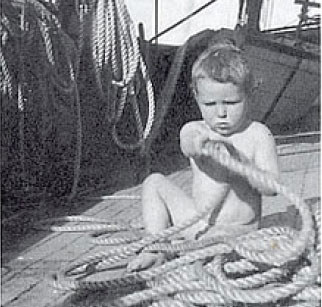
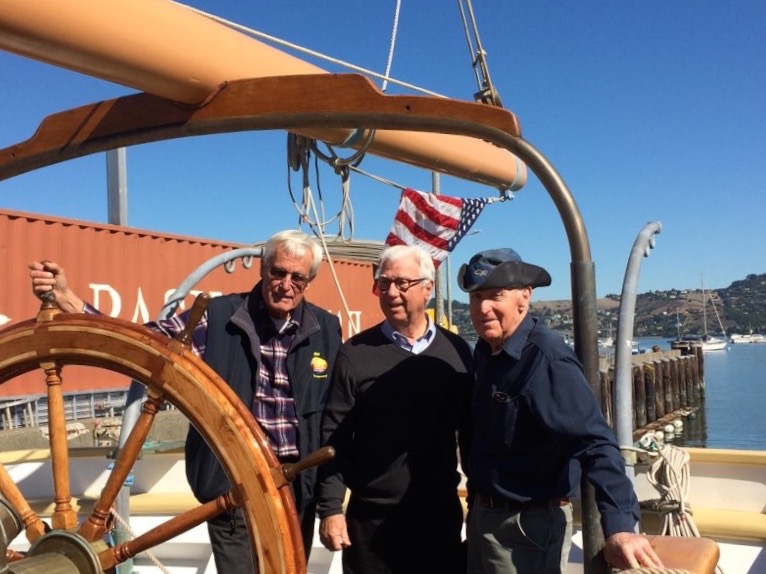
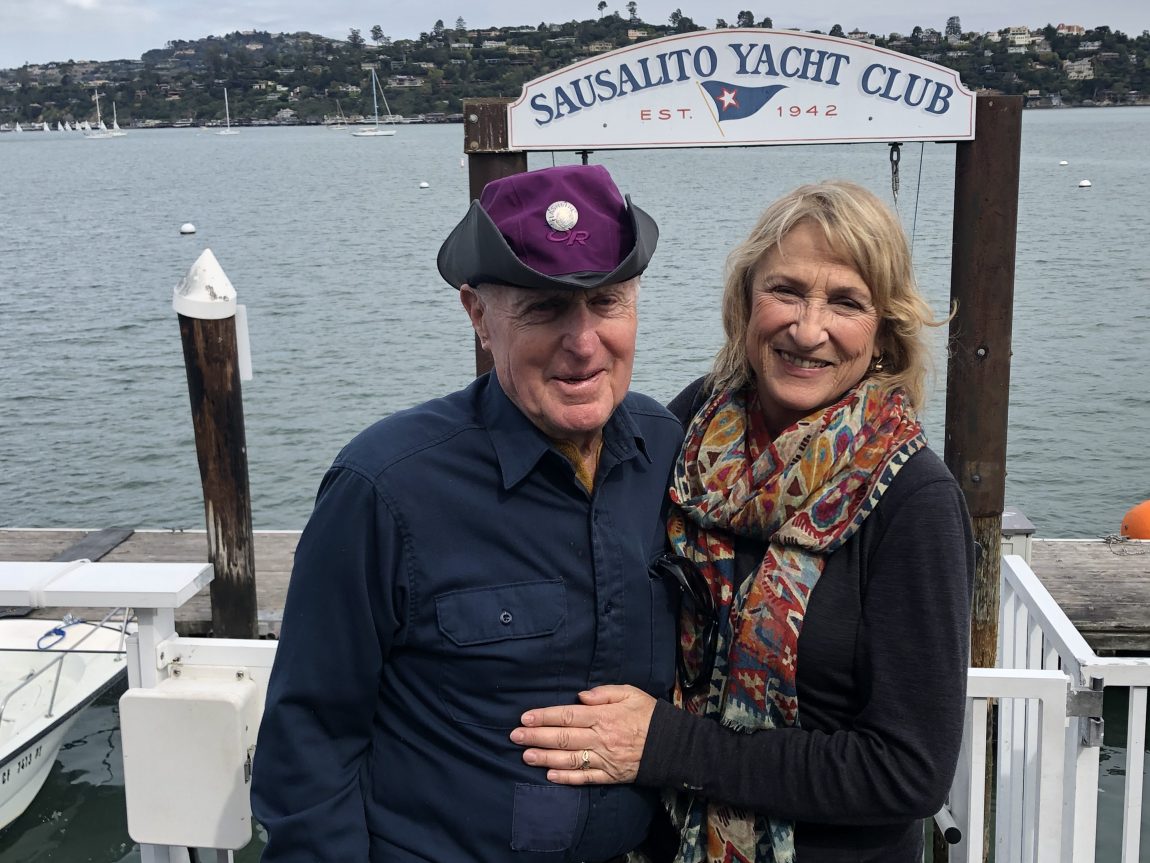
Join us this week for part two of our chat with one of the great legends of the sailing world, Commodore Tompkins. The 93-year-old Californian has sailed over 600,000 miles and has accumulated a life-time of sailing stories spanning his earliest memories to today.
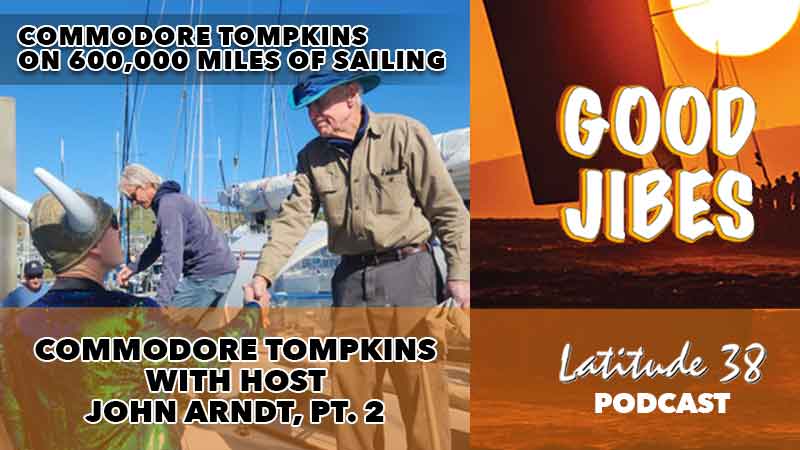
In this Part 2 — recorded in-person aboard his custom Wylie 39, Flashgirl — Commodore shares his stories with this week’s host John Arndt. You’ll hear his most memorable stories from racing and cruising around the world, the time he was featured in Sports Illustrated, the spicy origin of his boat name, how he studies the weather on a daily basis, and the impressive 11-year-old kid who made an impact on his sailing life.
Here’s a sample of what you’ll hear in this episode:
- The origins of Great Hope
- How Ron Holland arrived in San Francisco at age 18
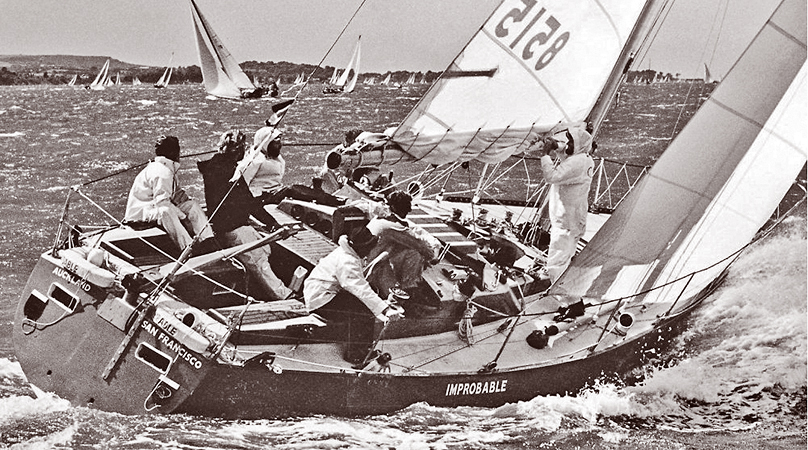
- Building Improbable in New Zealand with Ron Holland
- Sailing 12,000 miles to reunite with Nicky
- Racing aboard Improbable
Read more about Commodore in Latitude 38 here: “Commodore Tompkins on the Move Again”
Listen to the episode on Apple Podcasts, Spotify, and your other favorite podcast spots — follow and leave a 5-star review if you’re feeling the Good Jibes!
Check out the episode and show notes below for much more detail.
Show Notes:
- Part 2: Commodore Tompkins on 600,000 Miles of Sailing, with Host John Arndt
- [0:02] Welcome to Good Jibes with Latitude 38
- [0:14] Welcome aboard the legendary Commodore Tompkins
- [0:58] Racing aboard Improbable – a radical boat design
- [1:25] The influence of John Illingworth‘s storm-following theory
- [2:34] The origins of Great Hope
- [5:17] How Ron Holland arrived in San Francisco at age 18
- [6:13] Building Improbable in New Zealand with Ron Holland
- [8:19] The Schwab family discovers Improbable in a storm at Morro Bay
- [11:03] Featured in Sports Illustrated in 1972
- [12:38] Racing campaigns: Kialoa, Ondine, and Red Rooster
- [13:24] Three Fastnet races and cruising 50,000 miles
- [14:25] The story behind the name Flashgirl
- [17:42] 50,000 miles in the South Pacific without Starlink
- [18:12] Using Starlink and weather routing on the recent voyage
- [20:26] Are you a reader? Check out our virtual bookstore at Latitude38.com
- Transitioning from racing to cruising
- [23:16] The importance of landfalls after ocean passages
- [26:06] Designing and building a nesting dinghy with Tom Wylie
- [29:04] Favorite anchorages: ‘Ōpūnohu Bay in Moʼorea
- [31:25] The 2024 voyage to Pohnpei – 6,500 miles each way
- [34:16] Meeting Nicky – an 11-year-old with remarkable seamanship
- [38:57] Nicky’s perfect English and understanding
- [42:42] Sailing 12,000 miles to reunite with Nicky
- [46:13] Finding Nicky in North Carolina and planning a reunion
- [47:07] The magic of landfalls in the South Pacific
- [48:46] Have a sailing story? Send stories and photos to [email protected].
- Make sure to follow Good Jibes with Latitude 38 on your favorite podcast spot and leave us a 5-star review on Apple Podcasts
- Check out the December 2025 issue of Latitude 38 Sailing Magazine
- Theme Song: “Pineapple Dream” by Solxis
Transcript:
Please note: this transcript is not 100% accurate.
00:03
If you’re in charge of the bullet, you’re managing all the time.
00:14
This is John Arndt, publisher of Latitude 38, and I’m happy to be sitting here with Commodore Tompkins, one of the great legends of the West Coast sailing world, of the sailing world in general. He is going to be part of this next podcast telling us a little bit about his 600,000 miles of sailing, which could probably fill 40 podcasts. But we are very happy to have him aboard and have had so many stories on Commodore Tompkins in the pages of Latitude 38 through all these years.
00:43
and wanted to do a catch up here on our good jives to share another story of a west coast sailor but one that everybody should know. If they don’t know they’re going to learn a little bit more now.
00:58
Maybe how about some of the boats you raced? some of the, mean, I, that stands out for me is improbable again, out of 600,000 miles, I’m probably missing 590,000 or so many, but, improbable is one that stands out in my mind is one of your- She should, she should stand out in your mind. She was a radical departure. Yeah. And she grew out of my reading of John Ellingworth. John Ellingworth.
01:25
wrote about the European situation, Britain and transatlantic. He wrote, and I remember that the storm systems move from west to east across the Atlantic.
01:36
And if you can get a boat, which goes the speed of a storm system, you can ride one system across the Atlantic and you’ll have a really fast passage. was in Ellingworth? That’s interesting. that’s offshore. Yeah. that’s what I had 20 copies. mean, something for something to aim at. Anyway. Okay. Yeah. Improbable. Gary mall. Yeah. That’s Gary mall came into it for me. uh
02:05
George Giscaton was the youngest merchant marine captain in the South Pacific during the second world war. Okay. How he met my father, I don’t know, but they, George would come back from a mission someplace in the Philippines or something and they would sit on water bird and talk for long hours about politics and the sea and all these things. think largely about politics. So.
02:34
George had enthusiasm for my father, which is understandable. My father was a pretty half-open guy. A remarkable fellow, in fact. That’s part of the imprinting. I’ll say that. Well, not for George, for me. For you. So George had this thing about my father and my father’s adventures in Wonderbrook.
03:01
He had generated this enthusiasm for sailing, nothing like what he was doing in the merchant marine. But he concluded that he would approach John Spencer in New Zealand to build a schooner of a similar size to Wonderbird and similar length at least, know, fraction of the weight. And incorporate all the modern things you could get.
03:30
Is he the designer of ragtime? Spencer was. Spencer was. Okay. So a vessel emerged, which is not dissimilar from ragtime, but with a scooter rig and a lot of, I sailed on it. took it, I reached it in Bermuda. It was not a great boat. Prior to building that boat, Spencer and Kiscaden agreed they should build a one third model.
03:59
and they build a boat called Great Hope, eh which is a 24 foot scooter. Oh, interesting. Right. It’s meant to be a prototype. So the prototype is finished and George gets the word. He goes to New Zealand to see the boat and they go sailing. Oh, it’s a little boat. There’s a lot of sails in here. And so there three people on it. Spencer, Kiscadden.
04:23
and Ron Holland, aged 17 or 18. Predictably the thing had lots of glitches, lots of things that needed being 24 foot scooter. So they retire to the local bar and have a beer, which is what you do in New Zealand mostly. And George comes up with a scheme that why don’t we ship the boat to San Francisco, ship Great Hope to San Francisco.
04:49
And we can ship Ron Hong, young Ron here. Must’ve nudged him or something. said, and Ron can ride with the boat and he can do some of this work on the way up. That’s a pretty good scheme. Okay. So they, they put that scheme in play and George comes back to San Francisco and he no sooner gets into his office and he picks up the telephone and calls me and he says, Kongler, this is. uh
05:17
great hope is coming to Long Beach. I like you to take your soloing off the trailer and go down and get it for me. So I did. And that’s how I met Ron Holland. Okay, that’s great. Right when he landed on the shores of, was 18, you know, very green, 18 years old. He didn’t know what he was going to be, musician or a boat designer. He didn’t know what he was going to do. And he came and lived with George because he had him for a while.
05:43
So I’m answering, I’m telling you this story partially because you asked who my sailors were, these guys I sailed with. So I conceived the improbable project because Ron has some exposure as a youth, he had some exposure to the new rule, which is then coming in. So Ron wound up being the project supervisor for the construction. She was building the Atkins yard in New Zealand and Ron.
06:13
did not do a really wonderful job of supervising. The load came out about a thousand pounds heavy. This is improbable. Improbable, yes. Okay. And who was that built for? Well, the original design was for a triumvirate of friends of mine, people who trusted me. Yep. But they were financial.
06:34
downturns and they fell by the wayside. Dave Allen took over the design and made it a couple of feet longer. So it was Dave Allen’s boat. Okay. All right. And so Improbable then came back to the States and what did you do with Improbable? What was her ship? I mean, she came back, she, she was shipped directly to someplace in the East coast and then she was put in a truck and taken to Fort Lauderdale and
07:02
where she was commissioned in a big hurry and entered the SORC. That was her first campaign. We finished third in our class and it was 110 hours of racing and 100 hours of it were upwind. Oh, good grief. Yeah. So we did really well. Yeah, because the boat’s more of a downwind. She’s meant to be a downwind boat, based on the Illingworth thing. So when did you get to sail her downwind?
07:31
I sailed her in the Admiral’s Gulf. Okay. And that was the last time we sailed the boat. I sailed. Yeah. But they sailed her, I think she went across the Pacific. I don’t remember. I don’t really remember. Ron Holland sailed it along. Yep. And you know Bruce Schwab is restoring her right now. I know that. Yeah. So she’s gonna be… She’s not gonna be the same. She’s gonna be different boat. No.
07:57
Bruce isn’t going to just, uh, yeah, he’s not into the historical aspects of it as much as he’s in. He loves to be like you. He’s a, he’s a tinkerer to improve everything. that, that’s really, that’s amazing. Uh, so it’ll be great to have that boat back on its feet in sailing again. There’s a, there’s a little history about the Schwab family in that boat. Yeah.
08:19
I don’t remember the year. I’m sorry. I can’t help you with that. But my soloing is upside down and I’m long boarding it to try to get it smooth. It was a plaster and construction. I forget the number 74, I think. And it was lumpy as shit. And so I’m long boarding it. It’s winter time. I’m in Anderson’s Board yard. In comes a guy, it’s drizzling. Perfect for what’s in. In comes a guy with a pair of slippers.
08:49
And he’s standing there with his hands in his pockets while I’m sanding. And I asked him, said, what can I do for you? Nobody else in the yard, just him. And in the far northwest corner of the yard was Improbable, uh bow to the north. And he said, well, yes, do you know anything about that red boat over there?
09:14
And I said, well, as a matter of fact, I do. I know quite a lot about her. I’ll make a deal. You buy me lunch, I’ll tell you what I know. So he did. And he bought the boat from Alan. So, improbably, it was a three owner boat. Alan, Mr. Schwab Sr., who was an engineer for aerospace industry up there.
09:41
and his son. Right. That’s interesting. So really here is the story that I was told by Mr. Schwab. Yep. My son and I were moving some kind of little plastic throw away up the coast and we stopped in Morro Bay along with about a hundred other boats. Okay. It was blowing hard out of the Northwest. So everybody was waiting for the weather to moderate and we’re standing on the for end and down the harbor comes this little boat with a couple of reefs in the main and four guys.
10:11
and yellow slickers and they round up outside the raft, drop their sails, tie the boat up, come ashore, have a shower and a meal. The next morning they reverse the process. Meanwhile the raft is still there. The hundreds of people on boats are still waiting. And so Schwab thinks to himself, he told me, he said, that must be a hell of a boat. eh
10:37
These guys don’t seem to have any trouble with the weather or the elements. And so he bought it. Ah, interesting. That’s how it happened. He had seen it in the thick of the storm. Bruce was a part of that. Oh, great. He was there? Bruce was with his father and they were moving some kind of plastic piece of shit. Wow. Oh, that’s great. And so one thing I came across when, um,
11:03
looking things up for this, uh, for this talk was, uh, you’re in a sports illustrated issue in 1972. And, and that kind of, this is where sailing was different then. I mean, it was a noteworthy sport amongst basketball and all the other sports, but it showed up in sports illustrate, but you showed up in the sports illustrated. How did that come about? I don’t know. Somebody decided they should write an article. It was not a bad article.
11:31
The part I remember is he says that I drive, I drove my Volvo station wagon with all the verve of your grandmother. You’re a sailor, guess, on the shore as well. I never wanted to be particularly adept with a car. I never was. I didn’t grow up with them. Yeah.
11:53
I can’t remember that guy’s name, but it wasn’t a bad article. Yeah. Yep. And it was just the, you’d come across this radar screen of the sports illustrated editorial board somehow. how that happened. I know how it happened. I never asked him. One article I did like was one that showed up in motorboating and it was titled I’m Warwick Fly Me, which is a uh play on PSA. And that was written by Roger Vaughn and he was good. He was a really good writer.
12:23
Okay. And he’s dead now. Yeah. Yeah. The boats you’ve covered and raced. Favorite campaigns or favorite boats of your You asked about the boats. Yeah. On Dean.
12:38
Kiloa, all kinds of different kiloas, two or three different ones, two different on deans. Uh, half, you know, maybe 13 trips to across the Pacific and various boats, including the Hinkley. You did get the Hinkley put back together and racing, guess. Oh yeah. Yeah. Okay. I beefed it up on the inside. was oil canning pretty badly. Oh geez. So then, uh, yeah, on these, so these were.
13:02
the big grand prix programs of the era. That’s right. were those days. Red Rooster in Europe, I sailed with Dick Carter in Europe. Yeah. That’s an interesting campaign. You’ve done the Fastnet race? uh Three times, I Three times. What, on what boats? Spirit, Red Rooster, was the other one. I think three times.
13:24
Was it improbable? didn’t do improbable on the fast net. We must have done. Yeah, we did it improbable. That’s right. Yeah. Huh. At some point you were also a cruiser. You’ve been cruising 50,000 miles on your own boat, Flash Girl. You all this racing, get all these boats, but when you wanted to go cruising, you didn’t want to go on a slow boat. I’m sitting on Commodore Thompson’s cruising boat. There’s maybe a little strip of teak, but it’s nothing like the teak field. It’s a very open plan.
13:54
and very light and fast boat and maybe tell us a little bit is good sailboat. Yeah. She’s averaged six and half knots everywhere I go. Really? I sailed it for 10 years with my wife south of the equator. South of the equator. And that was part of the 40, 50,000 we did. And she sailed about the same speed coming back from Pohnpei, in spite of the fact that we had hard weather. Yeah. Difficult weather, not hard weather.
14:24
Yeah. Yeah.
14:25
What, yeah, I mean, what was the inspiration or inspiration or sort of guiding thoughts of designing flash girl and what is flash girl? Where’s that name come from? That’s a good story. Um, that part, I got the name flash girl from a sea Chandy. And if you should know, your readers should know that sea Chandy’s are work songs. So they have a sea Chandy for getting the anchor and they have a sea Chandy for making sale and they have a sea Chandy for returning to port.
14:56
and departing from port, not like that. And the reason for the sea chanis was that if you work to a rhythm, you can increase the amount of power you get. And it kept the troops happy too. So.
15:16
I can’t remember where we were, but I think we were at home in Mill Valley. And I don’t know how this came about, but there was a sea chanty, and the sea chanty was singing, it a homecoming sea chanty.
15:31
And the guys have been at sea for 80 days, you know, carrying wool out of Australia or something like that. These are a bunch of guys who are not terribly educated. They survive the Cape Horn Passage from west to east. And they come up the Atlantic, which also can be pretty hazardous. And they’re looking forward to getting home. Yep. And they’re singing about it. So you can imagine a guy sitting in a capstan with a fiddle. Yep. And they’re singing about coming home.
16:00
looking forward to getting drunk, getting a hot meal, getting bathed, and the flash girls of the town. The flash girls, like the flash girls of the town. So they were hookers. Yeah, professional women. And I like the sound of it because it’s two syllables. It’s unmistakable. I’ve read the Lloyd’s Register and there are no other flash girls around.
16:28
Oh, you’re kidding. This is it. This is it. Oh, now I have more privilege than I imagined. It is the name for a hooker. Oh, that’s funny. And so you could be, you know, you could be dismissive of a boat with that name or person who fit that description. But if you think about that in the era they’re talking about, nineteen, eighteen, eighteen fifties. So in order to be
16:57
independent and not have a man on whom you’re dependent. There were not many things a woman could do. Right. Right. And that was one of them. To sell our body. So there’s an element of independence.
17:12
Right. Which I like that appealed to me a great deal. So for all those reasons, see, nobody mistakes it. If you pick up the radio, which you don’t do these days and you identify yourself as flash girl, nobody misses it. Nobody’s confused with any other boat. That’s right. Yeah. And that’s sailing 50,000 miles aboard flash girl in the South Pacific without star link and all the communications you, uh, you are exercising your independence. actually that’s
17:42
in your career is really, yeah. right. I resonate to that. Yeah. You, Nancy used to run the radio and, we, we had sail mail in those days. oh No star link or anything like that. never, I still don’t do it. We didn’t use the radio on this trip. recent trip at all. Really? Just star link only. Yeah. It worked pretty well. You had starlink on this So you’ve had it. Okay. And, and speaking of Illingworth,
18:12
in following storm systems, I think that’s probably one of the best things of Starlink. You follow the, you saw the weather every day or did you see the weather every day using Starlink? I used this computer and Starlink and as Eric insisted, Eric Steinberg is heavily involved in the boat. Yes. And he insisted on Starlink.
18:35
And what he said when it was done, he said, the boat is now a lot like an internet cafe. And you can use your computers at will. So I use, I’ll show it to you. I use this particular program. This is now running off the city, oh town rather. The Richmond Yacht Club Wi-Fi. Yes.
19:05
Earth dot no. Oh wow, look at that. So now is that showing you currents or winds? That’s wind. That’s wind. This is the Y-inch chain. This is the California coast. Yep. This is, were down here someplace. Well, I study this every day. Every day, yeah. So these areas here are high pressure areas. There’s not much wind in them. Yeah. There were four large high pressure areas when we bought the boat home. Wow. Yeah. One of which was off here.
19:35
Now, this is showing you the weather right now. Does this give you a forecast like five days from now? You want to know how hard it’s blowing there?
19:44
And 40 is no, two 35 at 51 kilometers per hour. That’s 30. Yeah. 30 knots. So that’s a healthy blow. Yes. And there’s going straight from the Southwest. Yeah. And if you wanted to see a projection of.
20:02
Five days ahead of three days. I don’t think you can, at least I don’t know how to do it. But this is what I looked at every day. so you’d see these things. The big blue zones. The big blue zones. There’s no wind in there. We had four of those on the way up. Hey, Lab 238 listeners. We also hope your readers and we are kind of…
20:26
partial to reading since we’ve published a sailing magazine since 1977. And if you go to our website and go way down to the bottom of any page of our website, you’ll find a link to a bookstore where we have books from many of our past Good Jibes interviews and conversations with readers and West Coast sailors. And we’d also like, since it’s the month of December, to remind you that a book is a great Christmas gift. And if you go to our bookstore, you can find many of the books that have been recommended by our
20:56
Good Jibes Guests or books that we’ve had suggested in our current December issue of Latitude 38. And author and editor John Rees did a review of several sailing books, which I’ll mention here. The Way of the Sailor by David Kilburn, Kathy Simon, World Sailor. He also read and enjoyed The Track of the Typhoon by William Washburn, Cruising Around the World by Captain George Greenberg, and Under
21:23
Wide and Starry Skies by Nicholas Gorglen. Then we also have a couple other books which include Ben Neely’s book A Misspent Youth and three books from Julia Chauvin. All of these books are written up in our December issue of Latitude 38 and I think most are available on the Latitude 38 bookstore at the bottom of our website. And we have many books including the good old favorites like Joshua Slocum’s
21:53
Sailing Alone Around the World or Robin Lee Graham’s Dove, but hundreds of others that have been recommended by Good Jibes Guests or Latitude 38 authors and readers. So enjoy a book, they’re great under the Christmas tree, and also visit the Latitude 38 store where you could pick up a ball cap, a t-shirt, or anything else that might please a sailor on the west coast or anywhere. Thanks.
22:18
Just being switching from a racer and all these performance things and then going out to the South Pacific with Nancy and sorry for her loss. What were your favorite aspects of cruising or favorite places to go? Just to like as a cruiser, how did you, were you good at shifting gears from performance racing to settling down and drop an anchor? If you’re in charge of the boat, you’re managing all the time. Yeah. And you’re.
22:46
always checking the trim and where the helm feels and all that. So I don’t think most cruisers are like that actually, Commodore. I think. Well, that’s the way I am. Yes. Most cruisers see the sails as some kind of white triangle. Yeah. But it’s more to it than that. Yeah. A lot. Yeah. No, I had no trouble with transference. Yeah. My big thing is
23:16
apparently been with me through life, is landfalls. And part of the concept of this boat was that she had to be fast enough so she could cross the greatest expansive ocean in two weeks or so. And I broke that rule coming back from Pompeii. You sure did. Very simply because I figured that A, it was gonna be difficult to get into Honolulu because of the high pressures. And B, if I got into Honolulu,
23:46
It was going to take me a long time to get going again. had to the crew and all that. So I decided to stick it out. And you had enough food aboard. We had enough food. Yeah. Food was, that’s not a major issue. The issue, you’re probably aware of this, but the average participant in around the world race loses 10 pounds a leg. Right. 10 pounds of weight a leg because they dried food. Right.
24:14
This is in the ocean race or the Vondeglobe or yes. Right. And so you can, you can do marbles provided you have water. uh This one has a water maker. And everybody it cruises should have a water maker. Yeah. It’s the one thing you can’t do without. see. Actually, one of the things that you had somewhat unique, I think as a cruiser was a hard dinghy that was a
24:37
A split in half time, maybe. It’s a nesting dingy. Nesting dingy. So my close friend, Joe Cooper comes to the West coast a lot long after the boat was launched in 19, 1902 or something. Wait, 1902? To the…
24:54
Not like 2002, 100 years later. What’s a hundred years? Yeah. So I’m driving, I’m driving him back to the airport. had a nice weekend on the boat and I’m driving him back to the airport and he opens up and he says, I don’t know how to break this to you Commodore, but no boat that doesn’t have a rolling and preferably a rolling and a sailing dinghy.
25:23
can really be called a cruising boat. And I said, you know, Joel, I agree about that, but I can’t figure out where to put a boat because I’m not going to compromise sail handling or motion around the deck.
25:39
accommodate that and you see inflatables sprawled across the foredeck or you weren’t gonna put lots of tons of stainless steel on your transom and hang it off the transom. This guy next door has done that. Yeah. Davids. So he said, Joe said, I’ll send you a drawing. So he sent me a drawing for a collapsing or a nesting dinghy. And I thought, that’s a great idea. So.
26:06
I took the drawings and I transcribed them onto a piece of door skin. And so I got a profile and a plan. I tried it against the boat, but it was the Richmond Yacht Club in those days, closer to the club. And beautiful day. It was just gorgeous. Eight knots of wind, warm, beautiful, beautiful. But I couldn’t make I couldn’t make Joe’s drawings fit. So I’m sitting there.
26:36
house top, starboard side. And I took a pencil and tried to sketch on the door skin what I wanted. And I very quickly realized that I didn’t have what it took to do that.
26:51
So that evening I called Tom Wiley and I told him what I just told you. And we made a date and I drove over to Moraga and sat with him for an hour and a half and told him what I wanted. And he drew this boat. Oh really? She’s nine feet, four inches. And she nests beautifully and she sits underneath the boom and you don’t even know what’s there. Wow, beautiful. It’s perfect.
27:19
Who built it? I built it. You built it. Yeah. Strip building in cedar, red cedar covered with glass. It’s not as light as it could be, which is fine. Yeah. As far as I’m concerned. She rose in sales. She rose and I made her sale. Tom has what I’ll call an inordinate enthusiasm for his wishbone rigs.
27:44
And so the dinghy got fitted with a wishbone rig and it was just too complicated. It was too much shit. And so that stuff is in the garage now. But the motorhome has been a roaring success. It’s very tippy, it’s a round bottom boat. And one of my fond memories is that my wife sailed it, I don’t know, two or three miles downwind.
28:11
into Karekare, New Zealand, upper river. I met her there and she was laughing and giggling and the boat was full of mud because she’d run aground someplace and had to get out. And I got the boat, I cleaned it up and I beat back to the mooring where this boat was laying. And on the way there was a 40 footer also beating out the harbor.
28:36
And we raced, I beat him. And your nine foot My nine foot boat, yeah. So the cruising boat was a real dog. Yeah. But that was a good fun. That was a fun. The boat’s a good sailboat. Yeah. It goes about three knots and maybe five knots of wind. Wow. Beautiful. Beautiful. Yeah. That must be nice in those quiet morning sails, but you just get to get out of I only sailed it about half a dozen times. Oh really? Yeah.
29:04
is fussy. The choker and all that stuff. yeah. What about just for cruising people might be interested, did you have some favorite stops in the South Pacific or places that you wanted to stay longer or enjoyed most? I think if most cruisers are honest, they will recognize that their enthusiasm for a given anchorage has a lot to do with the holding quality of the bottom.
29:32
and the protection from the seaway or the wind or both. And my favorite place for all those reasons was Opanohu Bay in Moriah. It was a beautiful place, beautiful place. We’ve had some lofty volcanic mountains all around. I used to like to take my sailboard out there break of day, first light.
29:58
and watch the temperature change. see the clouds forming inside the peaks blowing off. Yeah. It’s just wonderful. Yeah. I think we just ran pictures of that from Bob and Alt who cruised through there, I think in the seventies. And I think that is one of the most.
30:16
beautiful bays and most appreciated bays of the. is beautiful. Yeah. that sounds. There’s another bay called Anahoe Bay in Amoria in the Marquesas. Yep. Northwestern corner of the island on which.
30:33
What is the town there? don’t know, the biggest town in the Marquesas. There’s an entrance like that. The trade winds are blowing across this way. So you go in this anchorage and you anchor here and you roll because the swell comes in the entrance and a whole bay is over here.
30:58
Those two are my favorites. Yeah, well that sounds beautiful. And you were out there 10 years? Yes. With Nancy. With Nancy. 50,000 miles. Spectacular. Yeah, 50 or 60,000. The last jaunt was 11,000 or so. Yeah. The last jaunt meaning to Pohnapai. Pohnpei. P-O-H-N.
31:25
P E I, Pay. That’s what they say. Yeah. Pone Pay. Pone Pay is an Anglo cessation. It’s you know, American soldiers. okay. All right. And maybe just give us a quick recap of that story. You, you sailed out under the gate in 2024, February, 2024. No, 2020. This year. February 13th this year. Yes. February, 2025 this year.
31:55
sailed to Pohn Pai, which is how many miles? 7,000 miles or something. 6,500. It depends on whether you go straight or not. Yeah. And then came back. I stopped in Honolulu on the way down. On the way down. And then sailed back. But you went down there. What for? The dinghy we mentioned. Yeah. It is beautifully finished, painted gray and white.
32:25
bootstripe and it’s really nice. Red bootstripe, gray like the deck. When the boat was moored with Nancy and me in Pompeii, the first time, it be 2005 or six, something like that. The locals had built a mole to support their fishing craft. the mole was built out of very jagged, sharp rocks.
32:55
Okay. Try to imagine 18 grit sandpaper blown up and that was the quality of those rocks. Ouch. So there’s about a two foot rise, maybe a three foot rise and fall all time and normal passage and boats and so forth. So there was motion and there was no way I could tie taxi dancers, that’s the name of the dinghy.
33:19
I couldn’t tie a taxi dancer alongside them. There’s just no way you could do it. Yep. Because she was beautifully finished. The natives didn’t have any trouble. They just come in and let the boats grind up. I came to the conclusion that if I drop the anchor out here on a shoal, it was only two, three feet of water, and I took the boat in like this and tied it off so I could just barely get ashore with a stern line. Yep.
33:48
then I could take the boat diagonally down here and it would rotate on the anchor line and I’d get three or four feet of clearance. Right. There was nothing particularly inspired about that, but it took a little dealing. I did it two or three times. I came back from town one day and I came down the ramp to the dock and standing in the water, maybe up to his waist was a youth. oh
34:16
He’s 11 years old. His left hand on the dinghy gunnel, boat had not moved from where I left it. He’s holding the anchor in his right hand. And it was clear from his posture that he was asking whether his help was welcome. Was it okay for him?
34:38
recover the anchor for me and bring the knee in. I nodded my ass, I our motorcyl groceries in the mail. So the second part is equally important. He takes the anchor with his 12 or 15 feet of chain, little chain, puts the anchor in the bottom very gently. He flakes the chain hand over hand over the rail, didn’t touch the hole. Puts the chain on top of the anchor. He coils the light line.
35:06
brings a belittle to me at the dock and I thanked him. And I didn’t think we spoke the same language at all. He’s a native of Pompeii ah as far as I was concerned. Okay, well he did that three different times. He did it once when Nancy was there, so she had seen it.
35:29
It’s necessary to recognize that this is kid. He’s not roughhousing with his peers in the showels. He’s playing with his paddleboard. So he saw what I had done with the boat. He analyzed it. He recognized that he could be helpful if he wanted and provided it was okay with me.
35:54
four or five or six different aspects of what he did. Which is doubly important because he had no peers. I was nobody, there was no way of mentoring him. He was on his own. He was on his own. He was a foster child, as I learned later. His name was Nicky Gideon. And one day after the third or fourth time that he brought the anchor in, ah he said, I am Nicky.
36:23
Well, my wife and I were duly impressed with his qualities. he’s 11. I he’s just a fucking stripling. And we made inquiries around the town. said, this kid has unusual qualities. I mean, he’s good.
36:49
careful, he’s considerate, he’s thoughtful, he’s observant, he’s courteous, fuck it man, he just, wished everybody was like that. We were advised that getting him into a better school was the best solution. we were, as a part of that advice, we were told that the students were lucky if the teacher showed up. All the schools said he’s not dead. So we,
37:19
met with the foster parents up at top of the ramp in this place, Cappenga-Morany Village, and we made arrangements to subsidize Nikki at the seventh day of the school. I was of the opinion that our arrangement, our agreement, was to continue as long as Nikki wanted to attend, but that’s not what Nancy did.
37:46
she truncated it after one year. Which meant that the school started billing the foster parents and the foster parents didn’t have the money. And as a result.
38:01
The whole Gideon family, foster parents and Nikki, had to have the attitude that we had reneged on our arrangement. We did. It was supposed to go on longer. So we’re seeing flashback to when we were making the arrangements. We sit at this big table in the foster parents’ home, and Nikki is there, and he’s somewhat, they’re like siblings, but they aren’t.
38:30
we make the arrangements and Nancy says, I want pictures of this gather. And so I said, okay, I’ll get up. I’ll go down and get them cameras on the boat. So it means descending the ramp, recovering the dinghy, going to the boat, getting the camera and coming back and anchoring the boat, et cetera. The whole process. So I get up and go to the door. As I get up, Nicky says, pay attention. I will go with you.
38:57
That’s a perfect sentence in English. That’s the first hint I had that he had hidden his knowledge of English. As we exited the door, he said to me, privately to me, he said, this will be good. That’s another perfect sentence. So on the way down the road, the ramp is a quarter mile in one.
39:24
really steep, I tried to explain to Nicky and realizing that he understood English adequately well. I tried to explain to him that Nancy and I didn’t go around spreading our wealth on a random basis. This was because of his unique qualities. I think I made that stick, I don’t know. It’s hard to say. He didn’t respond. So we recovered the boat, usual pattern.
39:54
Drove out to the boat, rode out to the boat. Nicky stayed in the dinghy while I went aboard and got the cam. So he’s starboard side, he’s holding the rail, very quiet, no wind. And the boat is not even fenders. I come up with the camera and I hang it, I hand it to him on a strap. He lets go of the side of the hull, puts the strap around his neck. He’s perfect.
40:22
Right. The kid does everything perfectly. have a very high standard for seamanship and he was perfect in every way and he had no mentor. Wow. Just intuitive. didn’t get any… no, no. Not intuitive. No, he’s observant. Observant, okay. And understanding. one of the, I mean, just to take a tiny little snapshot of the whole thing. He’s holding the hull.
40:50
which keeps the dinghy where he wants it. And I come up with a camera and I hand it, I dangle it in front of him. He lets go with the hand holding the boat, takes the strap and puts it over his neck and then re-grass the hull. Okay, he understands that there’s no wind or water affecting the dinghy and he can do that and everything will be okay. That’s a level of understanding that most people don’t have.
41:19
It’s subtle. It’s subtle. So much of sailing is subtle. Well, he had what it takes in this regard. Yeah. Okay. What I knew of Nicky when we sailed out of Pompeii. Oh, well the next morning we sit at the table, we make the arrangements and we’re leaving the next morning, seven o’clock in the morning. Here comes the anchors on deck and stowed for sea.
41:45
here comes Nicky on his paddle board to say goodbye and thank you, I guess. And he sat forward to me on the starboard side, cockpit, and I idled slowly down the channel, half a mile or so. And I don’t know, I’m not touching Philly at all, John. I don’t remember what we said.
42:13
I don’t remember the spoken conversation. And ultimately I said to him, you know, we’re at the end of the channel, you have to leave. We’re going to see. And I can’t take you with me. I could have taken him with me. Probably would have got away with it in some way. In any case, we stood up. I don’t think we shook hands. And I said to him, I will see you again.
42:42
It was apparent to me that he would prefer we not leave. Yeah. Cause he stopped and think about this interchange, this exchange. He’s an 11 year old boy and something has happened between cultures and ages. Yeah. And a connection, real connection. And, I was guilty in this year, this year to 2025 of
43:12
assuming or presuming that the connection was as profound for him as it was for me. There’s no guarantee of that at all. Yeah, none. And my inclination was, well, what I knew about him when I sailed out of Pompeii first time was his biological parents were in the United States someplace, and his brother.
43:40
when brother was with them. then Nikki came from Kepenga, Morangie, which is the most remote and farthest distant island in that group. And so in my mind’s eye.
43:57
I envisioned sailing into Pompeii. And if Nikki were there, he would see the boat. Wow. And come out to her. Yep. If he weren’t there, we’d been there for, let’s say, a week, then I would take the boat down to Cotega-Murangi and we’d see what happens there, because presumably he would be there. Yep. But I was mistaken. Yep. And I allowed my romantic…
44:25
impulses to overwhelm me. And it turns out that somewhere in the intervening years, 11 years or so, Nicky had moved to North Carolina. Wow. And so that’s where he is now. He’s working in a shop that makes 16 wheeled vehicles.
44:46
18-wheelers, big trucks. So I went to Pompeii in order to reunite with this guy, make good on a promise. Make sure your readers know that European contact with the South Pacific was disastrous for the South Pacific Islanders. Yes, they got outboard motors. Yes, they got televisions and electric lights.
45:14
But they’re no longer so self-sufficient. Yeah. Well, I would guess there’s a number of uh indigenous groups that feel the same way that the welcoming of the Western world was not an upgrade in their lives. Certain aspects, as you say, televisions. It’s germane to this discussion or my discussion because I told them I’d see him again. Yeah.
45:38
And I wanted to make sure that that took place if possible. Well, and when you say, when you went back to Pompeii, when people go back to visit these things, most people think of getting a plane ticket and you decided to sail 15,000 miles round trip or 12,000 miles round trip, is inspiring at age 93. that’s, know, it’s a win-win situation. Yeah. If he had been there and my imagination had been, had born
46:08
That would have been special. Oh, absolutely.
46:13
And it may yet be special. found him in North Carolina. know where he is. We spoke on the telephone. He knows I’m coming on the 11th. You’re coming at, you’re going out to see him soon? Yes. 11th of January. Oh, terrific. Oh, that’s fantastic. So we’ll have a day together. Yeah. Oh, that’s great to hear. Well, that’s a, that’ll be easier than your first trip to see him. Well, maybe except for TSA. But the sailing thing is, is I didn’t elaborate as much as I
46:42
I might have done. He you asked me what I really liked about voyaging and it’s the landfalls. It’s when you in sea for a long while and the landfall, particularly Tahiti. Tahiti is a 9,000 foot mountain and it rises out of the sea and if you sail in at the right time, it’s breathtaking. Once the sun come down the mountain, you smell them.
47:07
Vanilla and the reef, and it’s just really wonderful. Yeah. Yeah. Well, I think, yeah, I think a lot of people think of ending a long voyage. There’s a little bit of regret that the voyage is over, but there’s also that.
47:20
Yeah. The smell of land and the beauty of the drama, especially South Pacific islands. You showers, get fresh vegetables. Yeah. you get a good night’s sleep. Yeah. For the first time in a while. Well, Commodore, think that’s a good coverage of, but you know, I know there’s a thousand more stories that we haven’t covered. Maybe we’ll have to pick up another one here at some point. you wish. When your predecessor, Richard Spindler, came to interview me.
47:50
Yeah. He did three different weeks or three different months. Okay. Yeah. Well, maybe I’ll have to pick up on some more, because I know there’s a lot more miles under your keel and a lot more individual stories of dramas along the way, that’s, you know, it’s a function of your questions. So with that, we’re going to sign off and we would ask you to give us a thumbs up on Apple podcasts or wherever you listen to your podcast.
48:17
love you to stay aboard and subscribe with Latitude38 print magazine or go out and pick one up at any of your local retailers, marine retailers on the waterfront stretching anywhere from Seattle to San Diego. But with that we hope you can get out on your sailboat in California soon. It’s a 12-month sailing season. The Christmas holidays are ahead, New Year’s is ahead, but in the midst of all of that there’s some great sailing ahead. Thank you for listening. Thanks you for being part of the Latitude38
48:46
Good jibes and California sailing community we hope to see on the water soon. Or have you sent us your story to be in changes, sightings, ‘Lectronic Latitude? Send stories and photos to [email protected] Fair winds to all and best wishes for the holiday season!